The study of black holes has long fascinated astronomers and physicists alike, as these mysterious objects challenge our understanding of the laws of physics. Traditionally, black holes have been identified through their gravitational effects on nearby stars and gas, but the advent of gravitational wave astronomy has opened a new frontier in this field. Gravitational waves, ripples in spacetime caused by the acceleration of massive objects, were first detected in 2015 by the LIGO (Laser Interferometer Gravitational-Wave Observatory) collaboration. This monumental discovery not only confirmed a key prediction of Einstein’s general theory of relativity but also provided a new tool for probing the universe.
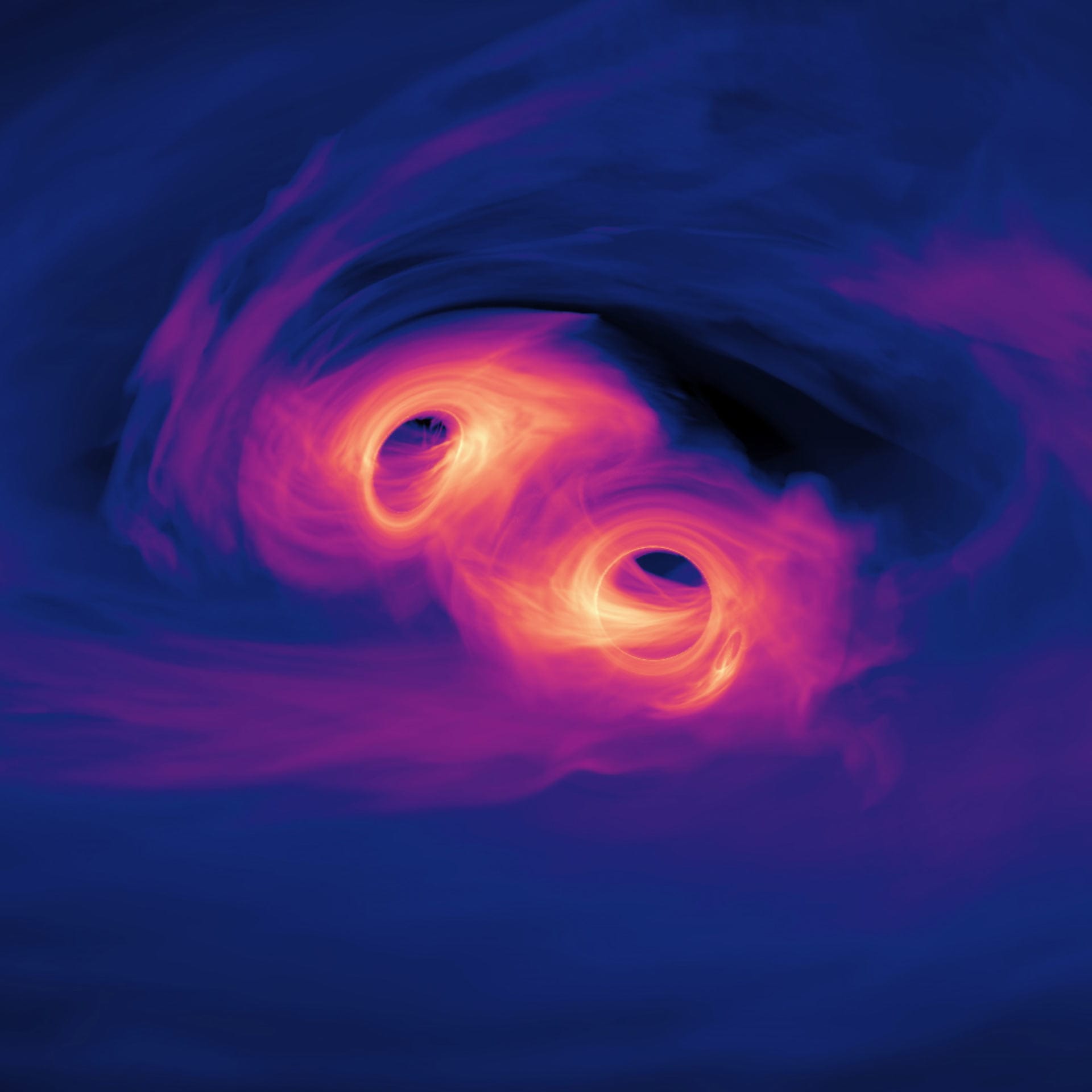
As researchers continue to analyze the data from gravitational wave events, they have begun to recognize the potential of these signals as a means of conducting a “cosmic DNA test” for black holes. Each merger of black holes produces a unique gravitational wave signature, which encodes information about the properties of the black holes involved. By studying these waveforms, scientists can infer critical details such as the masses and spins of the merging black holes, as well as their distance from Earth.
The ability to extract such information from gravitational waves is akin to reading the genetic code of black holes. Just as DNA reveals the biological lineage of an organism, the characteristics of gravitational waves can provide insights into the evolutionary history of black holes. For instance, the mass and spin of a black hole can indicate whether it formed from the collapse of a massive star or through the merger of smaller black holes. This information is crucial for understanding the processes that lead to the formation of black holes and their subsequent evolution in the universe.
One of the most significant findings from gravitational wave observations is the discovery of black holes that challenge existing models of stellar evolution. For example, the detection of black holes with masses greater than 100 solar masses suggests that there may be pathways to black hole formation that have not yet been fully understood. These findings prompt scientists to reconsider the mechanisms that govern the life cycles of massive stars and the conditions necessary for the formation of such massive black holes.
Moreover, the study of gravitational waves has revealed a diverse population of black holes, each with distinct properties. This diversity can be attributed to various factors, including the environment in which the black holes formed and the processes they underwent during their lifetimes. By analyzing the distribution of black hole masses and spins, researchers can gain insights into the conditions prevalent in different regions of the universe, such as dense star clusters or isolated environments.
The implications of this research extend beyond the realm of black holes. Understanding the formation and evolution of these cosmic giants can shed light on the broader processes that shape galaxies and the universe as a whole. Black holes play a crucial role in the dynamics of galaxies, influencing star formation and the distribution of matter. By studying their properties through gravitational waves, scientists can gain a more comprehensive understanding of the cosmic landscape.
As gravitational wave astronomy continues to evolve, the potential for new discoveries remains vast. Future observatories, such as the planned space-based LISA (Laser Interferometer Space Antenna), will enhance our ability to detect and analyze gravitational waves from a wider range of sources, including supermassive black hole mergers and the early universe. These advancements will undoubtedly lead to further revelations about the nature of black holes and their role in the cosmos.
In conclusion, the study of gravitational waves has revolutionized our understanding of black holes, providing a powerful tool for probing their properties and origins. By interpreting the unique signatures of gravitational wave events, scientists can conduct a cosmic DNA test that reveals the intricate details of black hole formation and evolution. As research in this field progresses, it promises to deepen our understanding of the universe and the fundamental processes that govern its evolution.