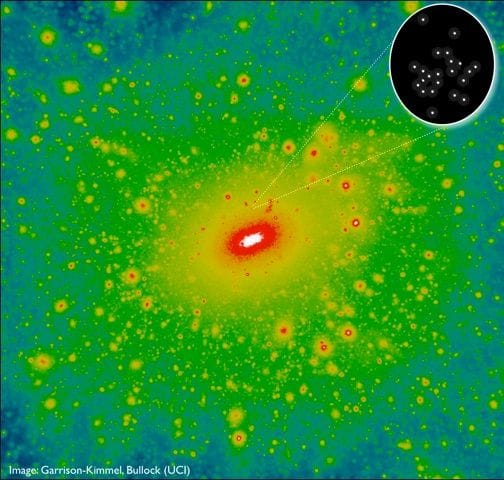
The discovery of the lightweight galaxy, named S1226-0006, was made using the Atacama Large Millimeter/submillimeter Array (ALMA) in Chile. The galaxy is seen as it existed just 800 million years after the Big Bang, a time when the universe was still in its early stages of formation. The team of astronomers, led by Dr. John F. Wu of the Harvard-Smithsonian Center for Astrophysics, used ALMA to observe the galaxy’s carbon monoxide emissions, which allowed them to estimate its mass.
The discovery of S1226-0006 is significant because it provides a unique window into the early universe, allowing astronomers to study the formation and evolution of galaxies like the Milky Way. The galaxy’s mass is similar to that of the Milky Way during its early days, making it an ideal candidate for studying the early stages of galaxy formation.
“S1226-0006 is a remarkable galaxy, and its discovery has opened up new avenues for understanding the formation and evolution of galaxies like the Milky Way,” said Dr. Wu. “By studying this galaxy, we can gain insights into the processes that shaped the early universe and the formation of the first stars and galaxies.”
The discovery of S1226-0006 also sheds light on the role of dark matter in the formation of galaxies. Dark matter is a type of matter that does not emit or reflect any electromagnetic radiation, making it invisible to our telescopes. However, its presence can be inferred by its gravitational effects on visible matter. The team of astronomers used the galaxy’s carbon monoxide emissions to estimate its mass, which allowed them to infer the presence of dark matter.
“Dark matter plays a crucial role in the formation of galaxies, and the discovery of S1226-0006 provides further evidence of its importance,” said Dr. Wu. “By studying the properties of this galaxy, we can gain a better understanding of how dark matter influences the formation and evolution of galaxies.”
The discovery of S1226-0006 is also significant because it highlights the capabilities of ALMA, which is one of the most powerful telescopes in the world. ALMA’s sensitivity and resolution allow astronomers to study the early universe in unprecedented detail, providing valuable insights into the formation and evolution of galaxies.
“S1226-0006 is a remarkable example of what can be achieved with ALMA,” said Dr. Wu. “The telescope’s capabilities have allowed us to study the early universe in unprecedented detail, and we are confident that it will continue to make groundbreaking discoveries in the years to come.”
In conclusion, the discovery of S1226-0006 is a significant milestone in the study of galaxy formation and evolution. The galaxy’s lightweight mass and actively forming nature make it an ideal candidate for studying the early stages of galaxy formation. The discovery also highlights the importance of dark matter in the formation of galaxies and demonstrates the capabilities of ALMA, which is one of the most powerful telescopes in the world.