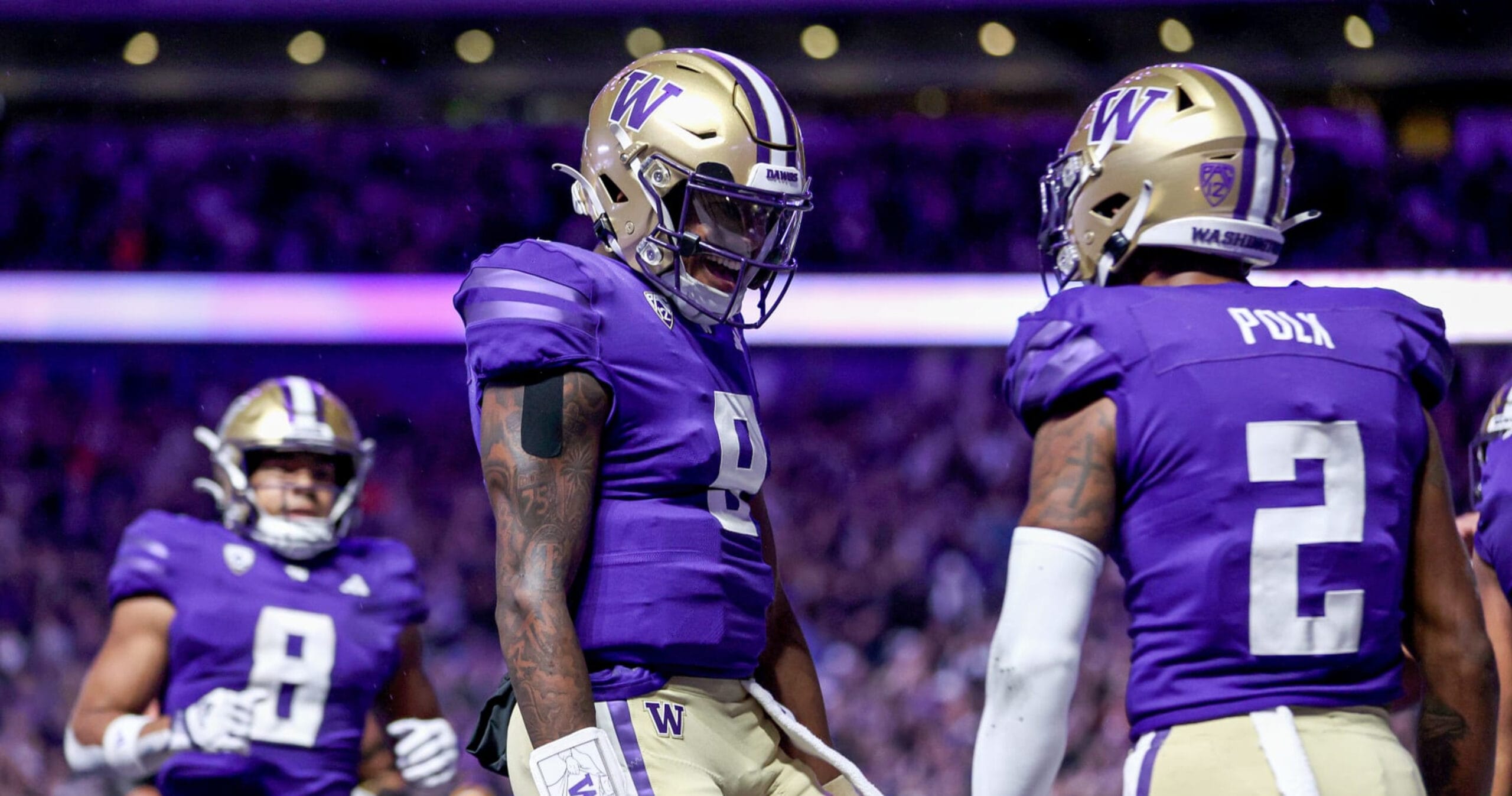
Travis Hunter has emerged as a standout figure in college football, capturing the attention of fans, analysts, and coaches alike. As the first player to win the Heisman Trophy while playing as both a wide receiver and a cornerback, Hunter’s achievements are unprecedented in the sport. His unique talent not only sets him apart but also raises questions about the future of college football and the potential for more athletes to follow in his footsteps.
Hunter’s journey to this remarkable achievement began at a young age, where he showcased his athletic prowess in various sports. However, it was football that captured his heart. His high school career at Collins Hill in Georgia was nothing short of spectacular. Hunter dominated the field as a wide receiver, racking up impressive statistics and earning accolades for his performance. Simultaneously, he proved to be a formidable cornerback, showcasing his exceptional skills on both sides of the ball. This duality in his game laid the foundation for what would become a historic college football career.
Upon committing to play for a prominent college football program, expectations for Hunter were sky-high. Coaches and analysts recognized his potential to transform the game. As a wide receiver, he possesses incredible speed, agility, and hand-eye coordination. He can create separation from defenders, making him a reliable target for quarterbacks. His ability to run precise routes and make contested catches has made him a nightmare for opposing defenses.
Simultaneously, Hunter’s defensive skills as a cornerback are equally impressive. His quick reflexes, keen instincts, and ability to read the game allow him to anticipate plays and shut down receivers. His physicality and understanding of defensive schemes have made him a pivotal player on the defensive side of the ball. This combination of offensive and defensive capabilities is what makes Hunter a rare talent in college football.
The implications of Hunter’s dual-role success extend beyond his individual achievements. His presence on the field represents a shift in how coaches and programs view athlete versatility. Traditionally, players were often pigeonholed into specific positions based on their skill sets. However, Hunter’s success challenges this notion, suggesting that multi-talented athletes can thrive in various roles. This could inspire coaches to recruit and develop players with diverse skill sets, ultimately changing the dynamics of college football.
Moreover, Hunter’s achievements have sparked discussions about the potential for a new generation of two-way players to emerge in the sport. As college football continues to evolve, the demand for athletes who can contribute in multiple capacities may increase. Coaches may begin to prioritize versatility in their recruiting strategies, seeking out players who possess the ability to impact the game on both sides of the ball. This could lead to a more dynamic and unpredictable style of play, as teams leverage the talents of multi-faceted athletes.
In addition to his athletic prowess, Hunter’s character and work ethic have also played a significant role in his success. He is known for his dedication to training and his commitment to improving his skills. Hunter’s humility and willingness to learn have earned him the respect of his teammates and coaches. His leadership qualities on and off the field further enhance his status as a role model for aspiring athletes.
As Hunter continues to make headlines in college football, his journey serves as an inspiration for young athletes everywhere. His ability to excel in multiple positions demonstrates the importance of hard work, determination, and a willingness to push boundaries. In a sport that often emphasizes specialization, Hunter’s success is a reminder that versatility can be a game-changer.
In conclusion, Travis Hunter’s historic achievement as the first two-way player to win the Heisman Trophy has significant implications for the future of college football. His remarkable skills as both a wide receiver and a cornerback challenge traditional notions of player specialization and may pave the way for a new generation of multi-talented athletes. As the landscape of college football continues to evolve, Hunter’s impact will undoubtedly be felt for years to come.