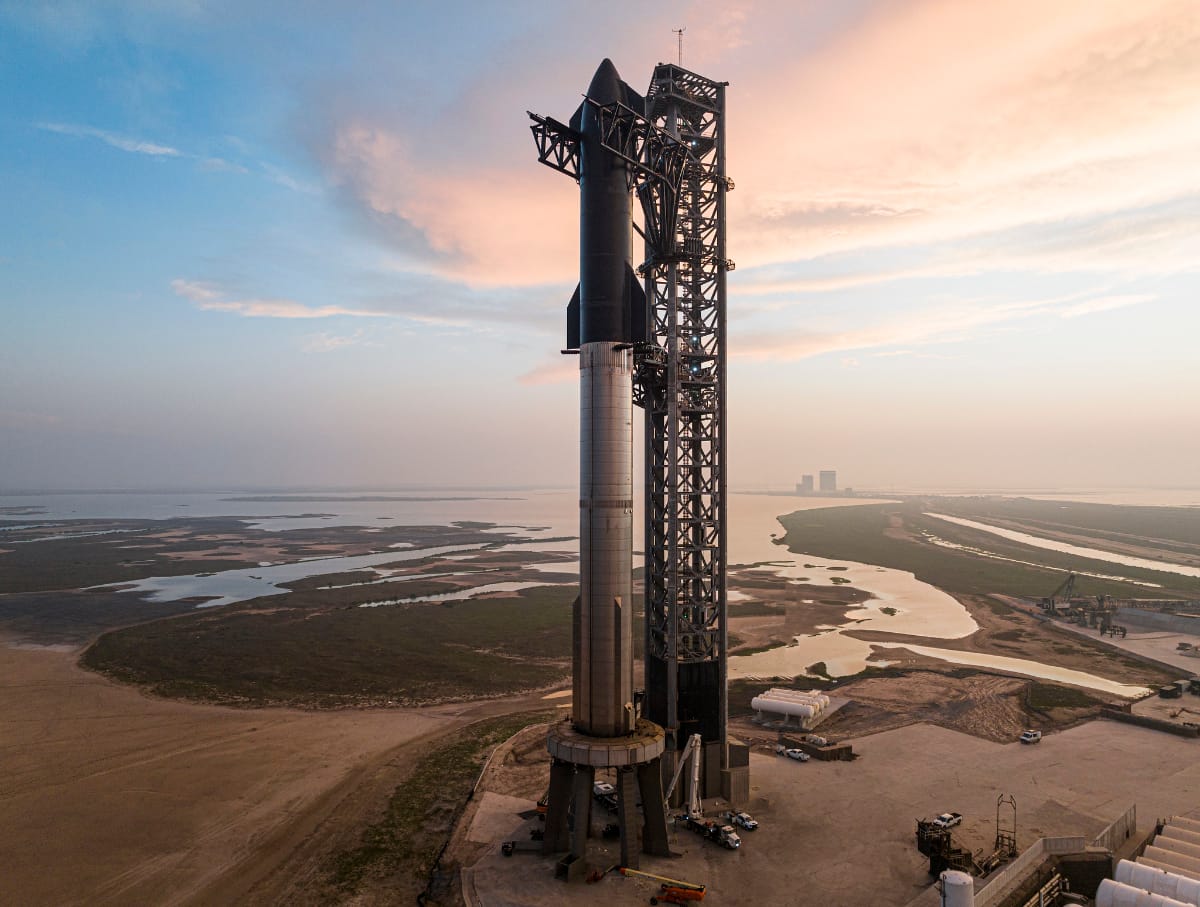
SpaceX, the aerospace manufacturer and space transportation company founded by Elon Musk, has officially announced the postponement of its seventh launch of the Starship megarocket. This delay adds to a series of setbacks that have characterized the development and testing of the Starship program, which aims to revolutionize space travel and enable human exploration of Mars and beyond.
The Starship program has been a focal point of SpaceX’s ambitions, with the company envisioning a fully reusable spacecraft capable of carrying both crew and cargo to a variety of destinations, including the Moon and Mars. The megarocket is designed to be the most powerful launch vehicle ever built, with the capability to transport large payloads and multiple passengers. However, the complexity of the technology involved has led to numerous challenges during the testing phases.
In a recent statement, SpaceX officials indicated that the decision to delay the launch was made after careful consideration of the technical issues that arose during pre-launch preparations. The company emphasized the importance of ensuring the safety and reliability of the Starship system before proceeding with any launch. This commitment to thorough testing reflects SpaceX’s approach to innovation, where the lessons learned from each test flight are used to improve future iterations of the spacecraft.
The seventh launch was initially scheduled for a date that had generated significant excitement among space enthusiasts and industry experts alike. However, as the launch window approached, engineers identified several areas that required further attention. SpaceX has a history of pushing the boundaries of aerospace technology, and the decision to delay the launch underscores the company’s dedication to achieving its long-term goals without compromising safety.
The Starship program has already seen several test flights, each providing valuable data that informs the ongoing development process. These tests have included high-altitude flights, landing attempts, and various static fire tests of the rocket’s engines. Each of these milestones has contributed to a better understanding of the vehicle’s performance and the challenges that must be addressed before a successful orbital launch can occur.
SpaceX’s delays are not uncommon in the aerospace industry, where the development of new technologies often involves unforeseen complications. The company has previously experienced delays with other projects, including the Crew Dragon spacecraft and the Falcon Heavy rocket. However, SpaceX has consistently demonstrated resilience and adaptability, often using setbacks as opportunities to refine their designs and processes.
The implications of the Starship program extend beyond just SpaceX. The development of a fully reusable spacecraft has the potential to significantly reduce the cost of access to space, opening up new possibilities for commercial spaceflight, scientific research, and exploration. As nations and private companies around the world invest in space technology, the success of the Starship program could influence the future landscape of space exploration.
In addition to its ambitious goals for Mars colonization, SpaceX is also working on projects that include satellite deployment, lunar landings, and potential missions to other celestial bodies. The Starship is central to these plans, and its successful launch is seen as a critical step in achieving these objectives. The company has already secured contracts with NASA for lunar missions as part of the Artemis program, which aims to return humans to the Moon by the mid-2020s.
As the aerospace community watches closely, SpaceX has not provided a new timeline for the delayed launch. The company is expected to continue its rigorous testing and evaluation processes before announcing a revised schedule. In the meantime, the focus remains on ensuring that the Starship system meets the high standards required for safe and successful space travel.
In conclusion, the delay of the seventh launch of the Starship megarocket highlights the complexities involved in developing cutting-edge space technology. While the postponement may be disappointing for many, it serves as a reminder of the importance of safety and thorough testing in the aerospace industry. As SpaceX continues to navigate these challenges, the world remains eager to see the advancements that will come from the Starship program and its potential to reshape the future of space exploration.