The discovery of near-Earth asteroids has always been a topic of intrigue, and the recent updates regarding asteroid 2024 YR4 have reignited conversations about planetary defense strategies. The asteroid, first identified in late 2024, has been under close scrutiny due to its trajectory, which intersects with Earth’s orbital path.
Currently, the probability of asteroid 2024 YR4 impacting Earth sometime in December 2032 is estimated at approximately 2.3%, a value that has slightly increased from its initial calculations. This figure translates to roughly a 1 in 43 chance, which remains very low when considered in the broader context. Nonetheless, even a minor spike in probability can prompt scientific discourse, given the potential implications of an asteroid collision.
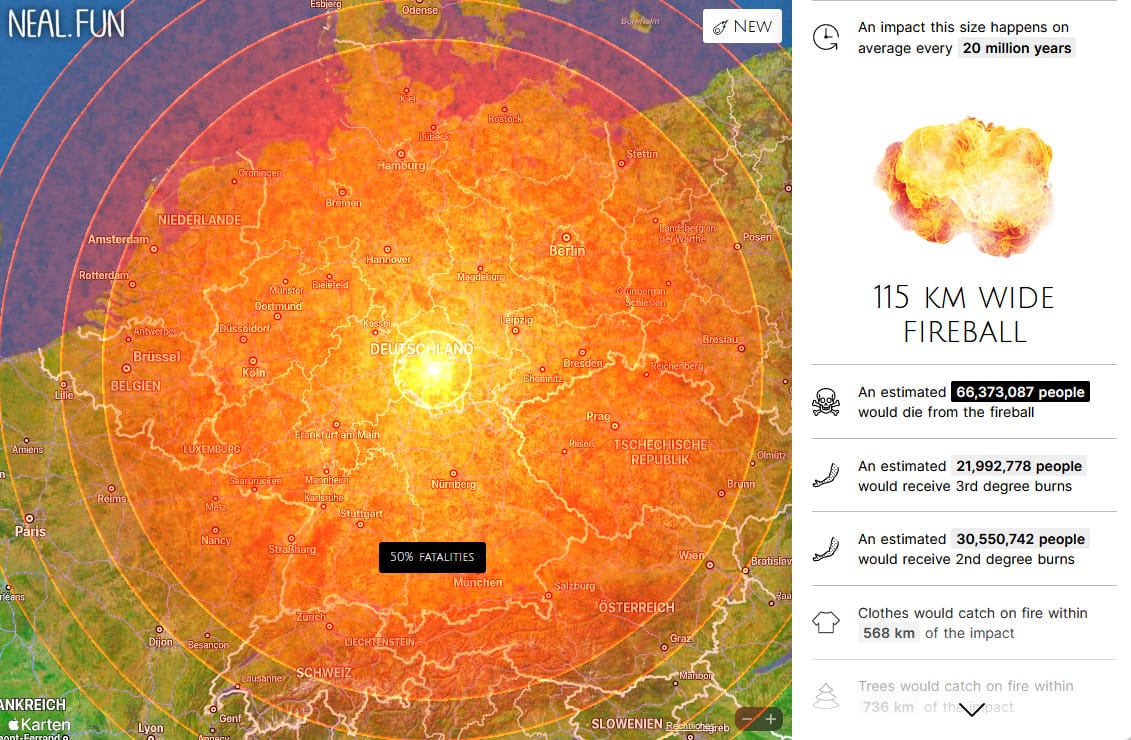
Asteroid 2024 YR4 has an estimated size ranging between 40 to 60 meters in diameter. While this makes it a medium-sized space rock, far smaller than the asteroid responsible for the mass extinction event 66 million years ago, its impact could still cause significant regional damage if it were to hit a populated area. It is worth noting that similar-sized asteroids are detected with regularity, and the vast majority pass by Earth without any consequence.
At present, international space organizations such as NASA and the European Space Agency (ESA) are closely monitoring the object. Observational data is being compiled through radar imaging, telescopic surveillance, and computational models to further refine trajectory predictions. As additional data becomes available, the odds of potential impact will likely be recalibrated, with the expectation that the probability may decrease.
Advances in Observational Techniques
Asteroid tracking has become a precise science over the decades, bolstered by improvements in telescope technology and radar capacity. Astronomers leverage these tools to measure an asteroid’s speed, trajectory, and potential orbital perturbations caused by other celestial bodies. The primary objective is to provide ample “warning time” should a hazardous path be confirmed.
In cases where an impact appears likely, mitigation strategies can involve altering an asteroid’s trajectory through kinetic impactors or even gravitational nudges. The success of NASA’s Double Asteroid Redirection Test (DART) mission in 2022 demonstrated the feasibility of such approaches. As technologies evolve, humanity’s ability to defend against asteroid impacts becomes increasingly effective.
Challenges in Risk Communication
Experts emphasize that communicating the risks associated with asteroid impacts requires a balanced approach. Public awareness is crucial to garnering support for space research, but undue alarm can lead to misunderstandings. Scientific reports, including those related to asteroid 2024 YR4, often highlight the improbability of catastrophic scenarios while keeping the public informed about precautionary measures in development.
What Sets 2024 YR4 Apart?
Asteroid 2024 YR4, while not the largest or most hazardous near-Earth object cataloged, has attracted attention due to its steadily increasing probability estimate. Dynamical models show how the asteroid’s orbit interacts with gravitational influences, particularly from larger planets like Jupiter. These influences could slightly nudge its trajectory towards or away from Earth.
With eight years left until the forecasted date of closest approach, scientists are optimistic that further studies will clarify whether Earth will remain safe. The majority of asteroids with initially concerning probabilities are ultimately reclassified as harmless as more precise measurements eliminate uncertainties.
The Global Protocol for Asteroid Detection
Organizations such as NASA’s Center for Near-Earth Object Studies (CNEOS) and the International Asteroid Warning Network (IAWN) collaborate to track and classify potential risks from space. Their databases include thousands of known near-Earth objects, each assigned a threat level based on size, proximity, and potential consequences of impact.
Asteroid 2024 YR4 is currently listed in the low-risk category due to its small size compared to the catastrophic potential of asteroid collisions that could cause global-scale consequences. Nevertheless, studying relatively smaller asteroids provides valuable training for handling more significant threats.
Future Implications
The slight increase in the impact probability of asteroid 2024 YR4 serves as yet another reminder of the importance of robust planetary defense initiatives. Recent advancements in asteroid detection and deflection make it possible to imagine a future where humanity is fully prepared for any celestial hazard.
Until then, ongoing observations will help refine our understanding of the asteroid’s movements. Public interest, combined with scientific rigor, ensures that measures are in place to address risks, however remote they might be.
As astronomers continue their work, the current message to the public is one of cautious optimism. Space-faring nations and astrobiologists are committed to studying known threats while preparing for the unexpected. This vigilance underscores humanity’s growing ability to observe, predict, and potentially prevent asteroid impacts.