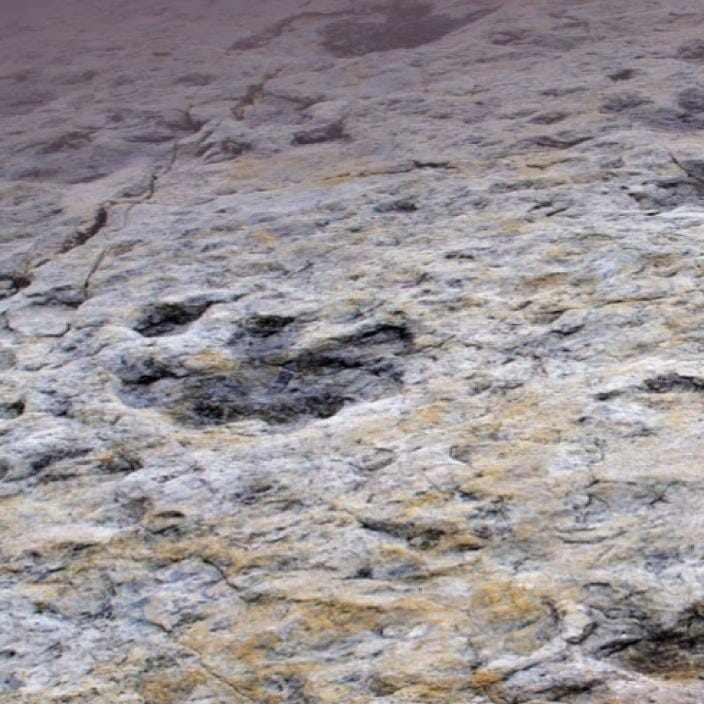
In a groundbreaking discovery for paleontology, researchers in the United Kingdom have unearthed hundreds of dinosaur footprints, representing one of the largest collections of its kind in the region. This remarkable find has garnered significant attention from scientists and enthusiasts alike, as it provides a unique window into the lives of dinosaurs that roamed the earth during the Jurassic period.
The footprints were discovered in a remote area known for its rich geological history, which has long been a site of interest for paleontologists. The site, characterized by its sedimentary rock formations, has yielded numerous fossils in the past, but this latest discovery stands out due to the sheer number of footprints found, as well as their exceptional preservation. Researchers believe that the footprints were created when a group of dinosaurs traversed the area, leaving behind a record of their movements.
The footprints vary in size, indicating that they were made by different species of dinosaurs, including both large herbivores and smaller carnivorous dinosaurs. This diversity suggests that the area was once a bustling environment, with various species coexisting and interacting. The footprints provide vital clues about the behavior of these ancient creatures, including their walking patterns, speed, and even social interactions.
One of the most fascinating aspects of this discovery is the level of detail preserved in the footprints. The impressions in the sediment capture intricate features, such as claw marks and the depth of each print, which can reveal information about the weight and gait of the dinosaurs. Researchers are currently analyzing these features to gain a better understanding of how these animals moved and interacted with their environment.
The significance of this discovery extends beyond the footprints themselves. It has the potential to reshape our understanding of dinosaur behavior and ecology during the Jurassic period. By studying the distribution of the footprints, scientists can infer the movement patterns of these dinosaurs, which may shed light on their migratory habits and feeding behaviors. Additionally, the site may provide insights into the environmental conditions of the time, including climate and vegetation, which could have influenced the dinosaurs’ behavior.
Paleontologists are particularly excited about the implications of this discovery for ongoing research in the field. The findings could lead to new hypotheses regarding dinosaur social structures and group dynamics. For instance, the presence of multiple footprints in close proximity may indicate herding behavior among certain species, suggesting that these dinosaurs may have lived and traveled in groups for protection or foraging purposes.
Moreover, this discovery highlights the importance of continued exploration and research in paleontology. As scientists uncover more evidence of prehistoric life, they are able to piece together a more comprehensive picture of the past. The footprints serve as a tangible connection to a time long gone, allowing researchers to engage with the history of life on Earth in a way that fossils alone cannot.
The site of the discovery is currently being preserved and studied by a team of paleontologists, who are employing advanced imaging techniques to document the footprints in detail. This meticulous approach ensures that the information gleaned from the site will be available for future research and education. The team is also collaborating with local educational institutions to promote awareness of this significant find and its implications for understanding our planet’s history.
In addition to its scientific importance, the discovery of these dinosaur footprints has the potential to attract interest from the public and tourism to the area. As more people become aware of the site and its significance, it may lead to increased funding and support for further research and preservation efforts. Educational programs and guided tours could also be developed to engage the community and foster a greater appreciation for paleontology and the natural history of the region.
As researchers continue to analyze the footprints and their context, they hope to uncover even more information about the dinosaurs that once inhabited the area. The ongoing study of these footprints represents a vital step in unraveling the mysteries of the past and enhancing our understanding of the evolution of life on Earth.
In conclusion, the discovery of hundreds of dinosaur footprints in the UK is a remarkable achievement for paleontology, offering unprecedented insights into the lives of these ancient creatures. This find not only enriches our knowledge of dinosaur behavior and ecology but also underscores the importance of ongoing research in the field. As scientists work to unlock the secrets held within these footprints, they are reminded of the enduring fascination that dinosaurs hold for both researchers and the public alike.