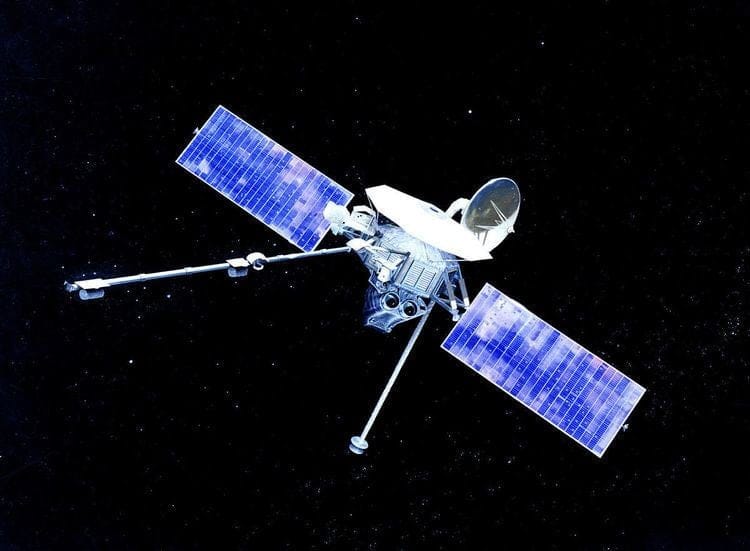
The exploration of Mercury, the innermost planet of our solar system, has long been a challenge for scientists and space agencies. Its proximity to the Sun, extreme temperatures, and lack of a substantial atmosphere make it a difficult target for observation. However, a new spacecraft has recently made significant strides in this area, capturing remarkably detailed images of Mercury’s surface that reveal features previously obscured from view.
The mission, which was launched with the aim of studying Mercury’s geology and magnetic field, has utilized advanced imaging technology to obtain high-resolution photographs of the planet. These images showcase a variety of geological features, including craters, ridges, and plains, providing a clearer picture of Mercury’s complex surface. The data collected is expected to contribute to a deeper understanding of the planet’s formation and evolution.
One of the most significant aspects of this mission is the ability to observe areas of Mercury that were not adequately captured by earlier missions, such as NASA’s MESSENGER spacecraft, which orbited the planet from 2011 to 2015. While MESSENGER provided valuable insights, its imaging capabilities were limited by the technology available at the time. The new spacecraft, however, is equipped with state-of-the-art instruments that allow for much higher resolution imaging, enabling scientists to study the planet’s surface in unprecedented detail.
The images reveal a diverse landscape, characterized by a variety of geological formations. Among the most striking features are the numerous impact craters that dot the surface, remnants of collisions with asteroids and comets over billions of years. These craters vary in size and age, providing clues about the planet’s geological history and the processes that have shaped its surface.
In addition to craters, the images also highlight extensive plains and ridges, which are believed to be the result of volcanic activity. The presence of these features suggests that Mercury has experienced significant geological activity in its past, challenging previous assumptions about the planet’s history. The data collected by the spacecraft will allow scientists to analyze the composition of these formations, further enhancing our understanding of Mercury’s geological processes.
Another important aspect of the mission is its contribution to our knowledge of Mercury’s magnetic field. The spacecraft is equipped with instruments designed to measure the planet’s magnetic field strength and structure. Understanding Mercury’s magnetic field is crucial, as it provides insights into the planet’s core and its thermal evolution. The new data will help scientists determine whether Mercury has a partially liquid core, which could have implications for our understanding of planetary formation in the solar system.
The mission has also sparked interest in the potential for future exploration of Mercury. The detailed images and data collected could pave the way for additional missions aimed at further investigating the planet’s surface and atmosphere. As technology continues to advance, the possibility of sending landers or additional orbiters to Mercury becomes increasingly feasible, allowing for more in-depth studies of this enigmatic planet.
The implications of this mission extend beyond Mercury itself. The findings could have broader significance for our understanding of rocky planets in general, including those outside our solar system. By studying Mercury’s geology and magnetic field, scientists can gain insights into the processes that shape terrestrial planets, which may be applicable to exoplanets that share similar characteristics.
In conclusion, the recent mission to Mercury has yielded spectacularly detailed images of the planet’s surface, revealing features that have remained hidden for decades. The advanced imaging technology employed by the spacecraft has provided scientists with valuable data that will enhance our understanding of Mercury’s geology, magnetic field, and history. As researchers continue to analyze the data, the mission is expected to contribute significantly to the field of planetary science and may inspire future exploration of this intriguing planet.