In a fascinating development in the field of theoretical physics, recent studies suggest that quantum entanglement may rewrite our understanding of gravity. This research presents a novel perspective that intertwines two of the most perplexing domains of physics—quantum mechanics and general relativity. While both fields have remained largely separate in their frameworks and implications, the potential relationship between quantum entanglement and gravitational force offers a tantalizing glimpse into how the universe functions at its most fundamental level.
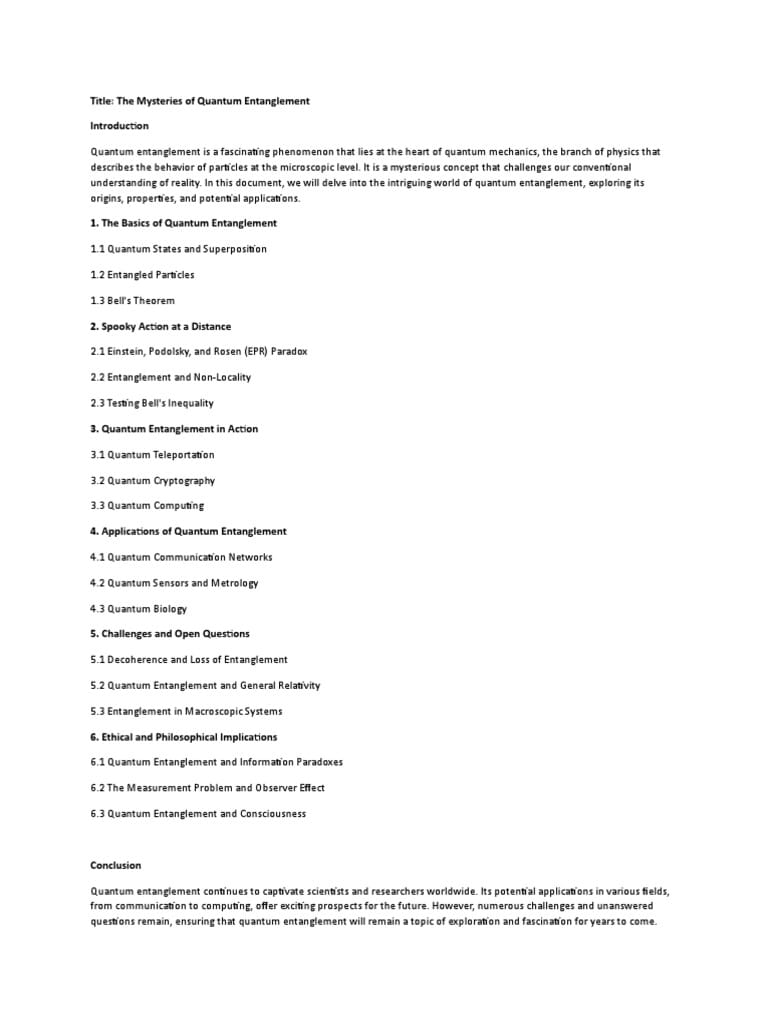
Quantum entanglement describes a phenomenon wherein particles become interconnected in such a way that the state of one particle instantly influences the state of another, regardless of distance. This phenomenon challenges conventional ideas about locality and causality, raising questions about the very fabric of reality as understood through classical physics. On the other hand, gravity, as described by Einstein’s theory of general relativity, is a force of attraction between masses that has traditionally been understood through spacetime geometry.
The new research, which emerges from a collaborative effort among physicists, theorizes that quantum entanglement could provide insights into the gravitational force at a quantum level. Specifically, researchers suggest that interactions occurring at the quantum scale might yield new ways of thinking about gravity, potentially integrating it with the principles of quantum mechanics. This integration is pivotal, given that our current physical theories present significant discrepancies in scenarios involving both quantum scales and relativistic effects, such as black holes or the initial moments of the universe.
To understand the implications of these findings, it is essential to recognize the longstanding challenge in physics involving the reconciliation of quantum mechanics and gravity. Quantum mechanics excels at explaining the behavior of particles at the smallest scales, while general relativity effectively describes the universe’s structure and dynamics at broader, astrophysical scales. However, a unified theory that seamlessly merges both realms has remained elusive.
The proposal stemming from recent investigations posits that quantum entanglement might act as a mechanism for connecting quantum fields and gravitational phenomena. This could mean that the entangled states of particles might not just be metaphysical curiosities, but could play an active role in gravitational interactions. By establishing a connection between quantum states and the geometric fabric of spacetime, the study implies a revolutionary shift in our understanding of these fundamental forces.
Central to these discussions is the examination of how entangled particles exist in a superposition of states, which leads to correlations that cannot be explained by classical physics. This aspect of entanglement raises questions about the nature of information transfer and how gravitational fields operate at a quantum level. The potential for a link between entangled particles and gravitational phenomena could fundamentally alter how we contemplate forces in the universe and the transmission of information across spacetime.
Researchers are exploring various experimental setups to test these theories. One proposed approach involves examining the behavior of entangled particles under the influence of gravitational fields, potentially observable in experiments conducted in highly controlled environments. Such investigations aim to uncover whether the presence of gravity alters the entangled states and, conversely, if entangled states provide insights into the mechanisms that underpin gravitational interactions.
As scientists delve deeper into these questions, the implications for practical applications of this research could also be transformative. Should a coherent theory unifying gravity and quantum mechanics emerge from these investigations, it may pave the way for advancements in fields ranging from quantum computing to gravitational wave detection technologies. Moreover, a deeper understanding of entanglement and gravity could enhance our knowledge of the early universe, black hole behavior, and the fundamental laws governing reality.
Although this line of inquiry is still in its nascent stages, the growing body of research underscores a paradigm shift in theoretical physics. By suggesting that quantum entanglement may influence gravitational interactions, science is on the brink of potentially redefining the laws of physics as we know them. The dialogue surrounding this topic continues to spark interest across the global scientific community, with numerous researchers committed to exploring these ideas further.
In conclusion, the assertion that quantum entanglement may rewrite the rules of gravity is not only a fascinating conjecture but also a compelling focal point for current research in theoretical physics. As investigators work diligently to probe the intersection of these two critical fields, the potential revelations could reshape our comprehension of the universe’s structure and dynamics, ultimately enriching the tapestry of scientific discovery. The quest to marry quantum mechanics with gravitational phenomena continues to unfold, promising intriguing insights that could forever alter the landscape of modern physics.