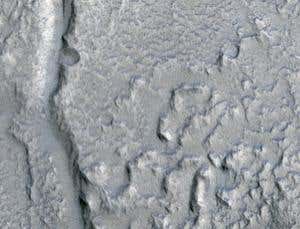
Recent findings published in the scientific journal ‘Nature Geoscience’ reveal a striking new discovery on Mars: the presence of clay mounds and hills. These geological formations have garnered significant interest from the scientific community as they shed light on aspects of the Red Planet’s history. While clay on Earth typically forms in the presence of water, the discovery of these structures on Mars has prompted speculation about the potential existence of water in Mars’ past.
A team of researchers, led by Geologist Dr. Laura Kerber from the University of Hong Kong, studied high-resolution images from Mars Reconnaissance Orbiter. They identified pedestal craters which are characterized by the presence of clay mounds and associated with the formation of clay hills. Studies conducted by Kerber and her colleagues indicate that the clay is a product of weathering, which suggests that water may have once played a significant role in the Martian environment.
What sets these clay formations apart from others found on Mars is their relatively large size and unique morphology. The investigation of these structures is significant as it implies that the climate on Mars was once warmer and wetter than previously anticipated. This opens up new questions about the potential for past life on Mars and its future colonization prospects.
The findings also hold great importance for understanding the geological processes that have occurred on Mars since the ancient water disappeared. The volcanic activity on the planet could have led to the loss of its atmosphere along with the water, turning the Red Planet into the cold, dry desolate world we see today.
Further research will continue to explore these clay formations and their potential implications on the history of water on Mars. By unravelling the secrets of these ancient mounds and hills, scientists are gradually piecing together a more comprehensive understanding of Mars’ past and its role in the evolution of our solar system.