NASA has made significant strides in the exploration of our solar system, and one of its latest achievements involves the observation of volcanic activity on Io, one of Jupiter’s most intriguing moons. Using advanced imaging technology aboard the spacecraft, scientists have gathered compelling evidence of the active lava flows and eruptions that characterize this unique celestial body. This article delves into the findings of NASA’s exploration, the implications for our understanding of volcanic activity beyond Earth, and the broader significance of these observations in the context of planetary science.
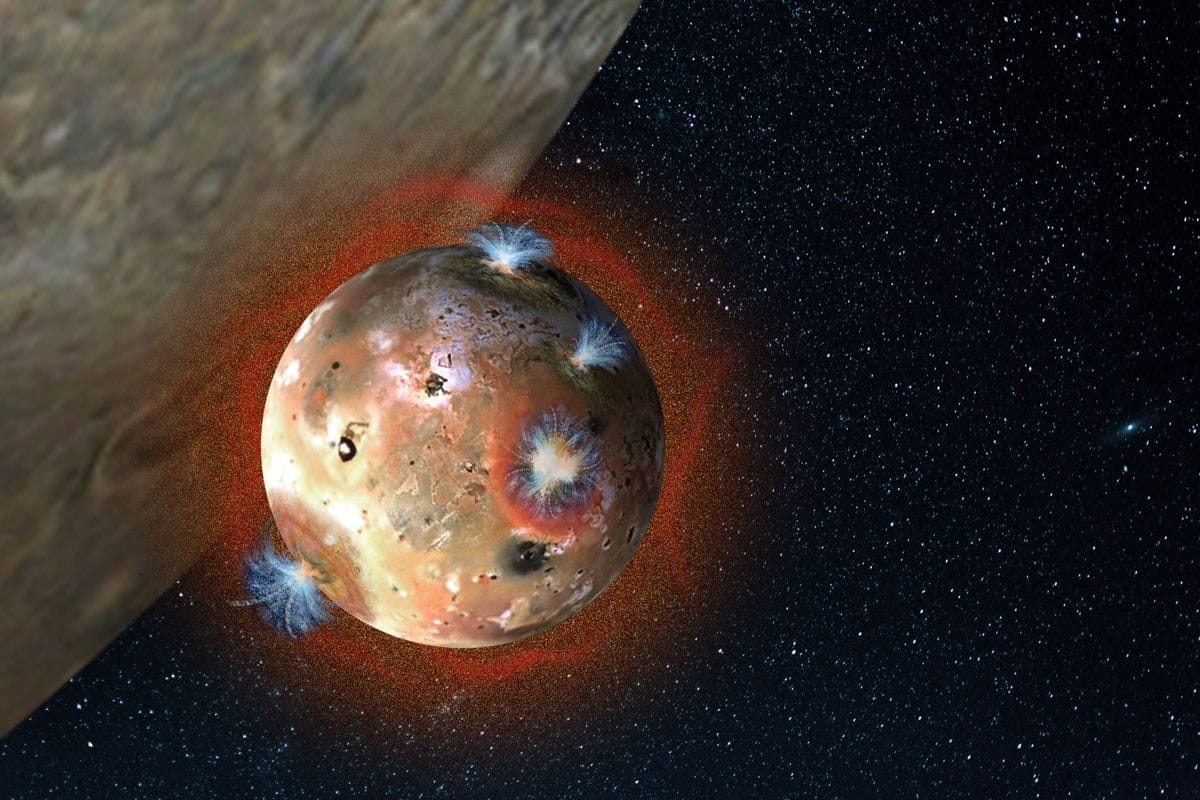
Io, one of the four largest moons of Jupiter, is renowned for its extreme geological activity. It is the most volcanically active body in the solar system, a distinction that has been confirmed by various missions over the years. The recent images captured by NASA’s spacecraft provide a detailed view of the ongoing eruptions and lava flows, showcasing the moon’s dynamic environment. These observations are crucial for scientists as they seek to understand the processes that drive such intense volcanic activity.
The volcanic eruptions on Io are primarily driven by tidal heating, a phenomenon caused by the gravitational interactions between Io, Jupiter, and the other Galilean moons. This gravitational tug-of-war generates immense heat within Io’s interior, leading to the melting of its subsurface materials and, subsequently, the eruption of molten lava on its surface. The images from NASA’s spacecraft illustrate these eruptions, with some appearing as bright spots on Io’s surface, indicating fresh lava flows.
One of the most significant findings from the recent observations is the identification of a large lava lake, which presents a rare opportunity for scientists to study the behavior of molten rock on a planetary body other than Earth. The presence of such lakes suggests that Io’s volcanic activity is not only frequent but also varied, with different types of eruptions occurring across its surface. This diversity in volcanic activity provides valuable insights into the geological processes that shape celestial bodies and can help inform our understanding of similar processes on exoplanets.
The implications of these findings extend beyond Io itself. By studying the volcanic activity on this moon, scientists can draw parallels with volcanic processes on Earth and other bodies within our solar system. Understanding how these processes operate in different environments can enhance our knowledge of planetary formation and evolution. Additionally, the study of Io’s geology may offer clues about the potential for life on other moons and planets, particularly those with subsurface oceans or volcanic activity that could create habitable conditions.
Moreover, the images captured by NASA’s spacecraft contribute to a growing body of evidence regarding the complex interactions between celestial bodies within our solar system. The gravitational forces at play not only affect volcanic activity on Io but also influence the geological features and atmospheres of other moons and planets. This interconnectedness highlights the importance of studying multiple celestial bodies in tandem, as it can lead to a more comprehensive understanding of planetary science.
The exploration of Io is part of NASA’s broader mission to investigate the outer planets and their moons. Future missions are planned to further study the Galilean moons, including Europa, which is of particular interest due to its subsurface ocean and potential for harboring life. The findings from Io’s volcanic activity will undoubtedly inform these future explorations, as scientists continue to piece together the intricate puzzle of our solar system.
In conclusion, NASA’s recent observations of volcanic activity on Io represent a significant advancement in our understanding of this fascinating moon. The stunning images captured by the spacecraft not only reveal the dynamic nature of Io’s surface but also provide critical insights into the geological processes that govern celestial bodies. As scientists continue to analyze these findings, they will contribute to a deeper understanding of volcanic activity across the solar system and the potential for life beyond Earth. The ongoing exploration of Io and its counterparts will undoubtedly yield further discoveries that will shape our knowledge of planetary science for years to come.