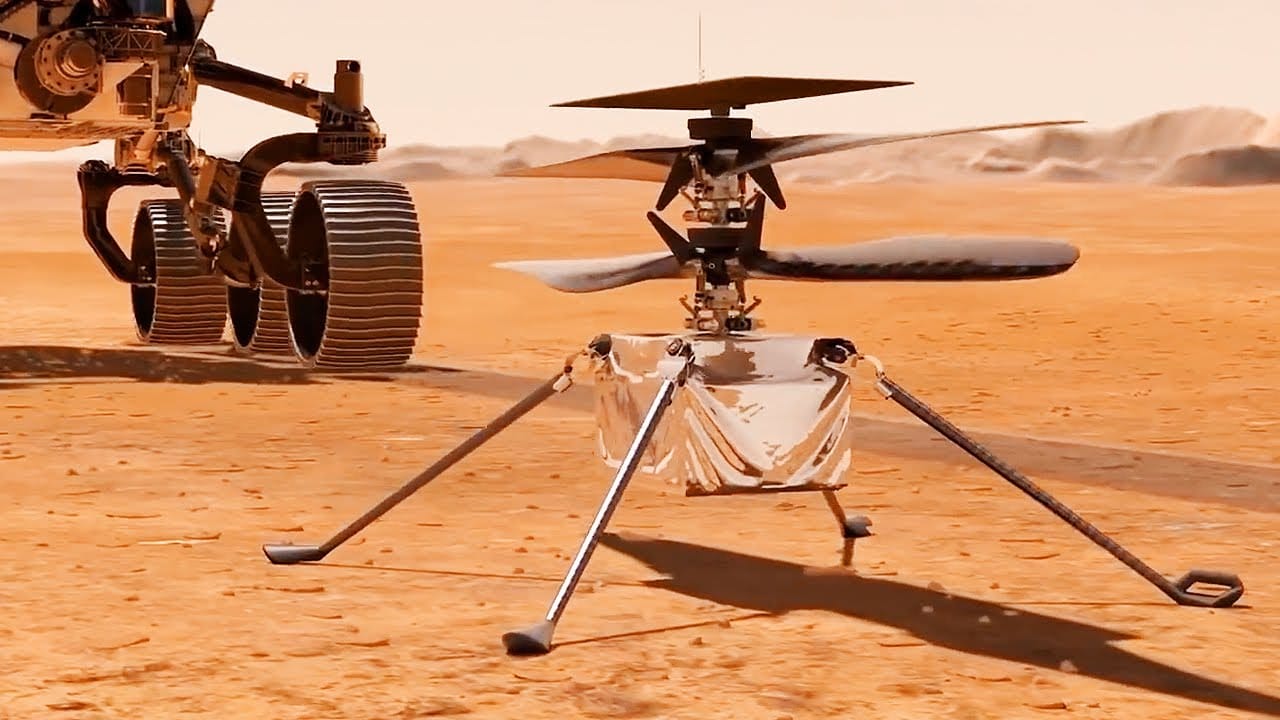
NASA has made significant strides in its exploration of Mars, particularly with the groundbreaking achievements of the Ingenuity helicopter. Following the success of this pioneering aerial vehicle, NASA has recently unveiled a new design for a Mars helicopter that aims to further enhance the agency’s capabilities in exploring the Martian landscape from the skies. The decision to develop a new helicopter design stems from the valuable lessons learned during Ingenuity’s historic flights, which have provided critical data on the feasibility of powered flight in the thin Martian atmosphere.
Ingenuity, which was initially intended as a technology demonstration, successfully completed multiple flights, exceeding its original mission objectives. The helicopter’s ability to fly in an atmosphere that is only about one percent as dense as Earth’s has opened up new possibilities for aerial exploration on Mars. The insights gained from Ingenuity’s operations have informed the design of the new helicopter, which is expected to be more capable and versatile in its mission profile.
One of the key advancements in the new helicopter design is its enhanced flight performance. Engineers have incorporated improved rotor systems and propulsion technologies that allow for greater lift and stability during flight. This is particularly important given the challenges posed by the Martian environment, which includes variable wind conditions and rugged terrain. The new helicopter is designed to operate effectively in these conditions, enabling it to conduct more complex aerial surveys and gather data over a wider area than its predecessor.
In addition to improved flight capabilities, the new design also emphasizes the importance of data collection. The helicopter will be equipped with advanced sensors and cameras that can capture high-resolution images and gather scientific data during its flights. This data will be invaluable for understanding the Martian surface and atmosphere, as well as for identifying potential sites for future exploration by rovers or human missions. The integration of sophisticated imaging technology will allow scientists to analyze geological features and search for signs of past or present life on the planet.
Another significant aspect of the new helicopter design is its increased autonomy. While Ingenuity relied on commands sent from Earth for each flight, the new helicopter will be equipped with advanced autonomous navigation systems. This will enable it to make real-time decisions during its flights, allowing for more efficient exploration and the ability to adapt to unforeseen challenges. The implementation of autonomous flight capabilities is a crucial step toward enabling more complex missions that require minimal input from mission control.
NASA’s new helicopter is also designed with a focus on sustainability and energy efficiency. The agency has incorporated lightweight materials and energy-efficient systems that reduce the overall weight of the vehicle, allowing for longer flight durations and reduced energy consumption. This emphasis on sustainability is particularly important for future missions, as it aligns with NASA’s goals of conducting cost-effective and environmentally responsible exploration.
The development of this new Mars helicopter design is part of NASA’s broader strategy to enhance its exploration capabilities on the Red Planet. The agency has plans for future missions that will leverage aerial vehicles to complement ground-based exploration efforts. By combining the strengths of both helicopters and rovers, NASA aims to gather comprehensive data about Mars, facilitating a deeper understanding of its geology, climate, and potential for habitability.
As NASA moves forward with the development of this new helicopter, the agency is also actively engaging with the scientific community and industry partners. Collaboration with external stakeholders will be crucial in refining the design and ensuring that the helicopter meets the rigorous requirements of Martian exploration. NASA’s commitment to open innovation and collaboration reflects its recognition of the importance of diverse expertise in achieving mission success.
In conclusion, NASA’s unveiling of a new Mars helicopter design inspired by Ingenuity’s success marks a significant advancement in the agency’s exploration efforts. With enhanced flight capabilities, advanced data collection systems, increased autonomy, and a focus on sustainability, this new helicopter is poised to play a vital role in the future of Martian exploration. As NASA continues to push the boundaries of what is possible in space exploration, the new helicopter design stands as a testament to the agency’s dedication to innovation and scientific discovery.