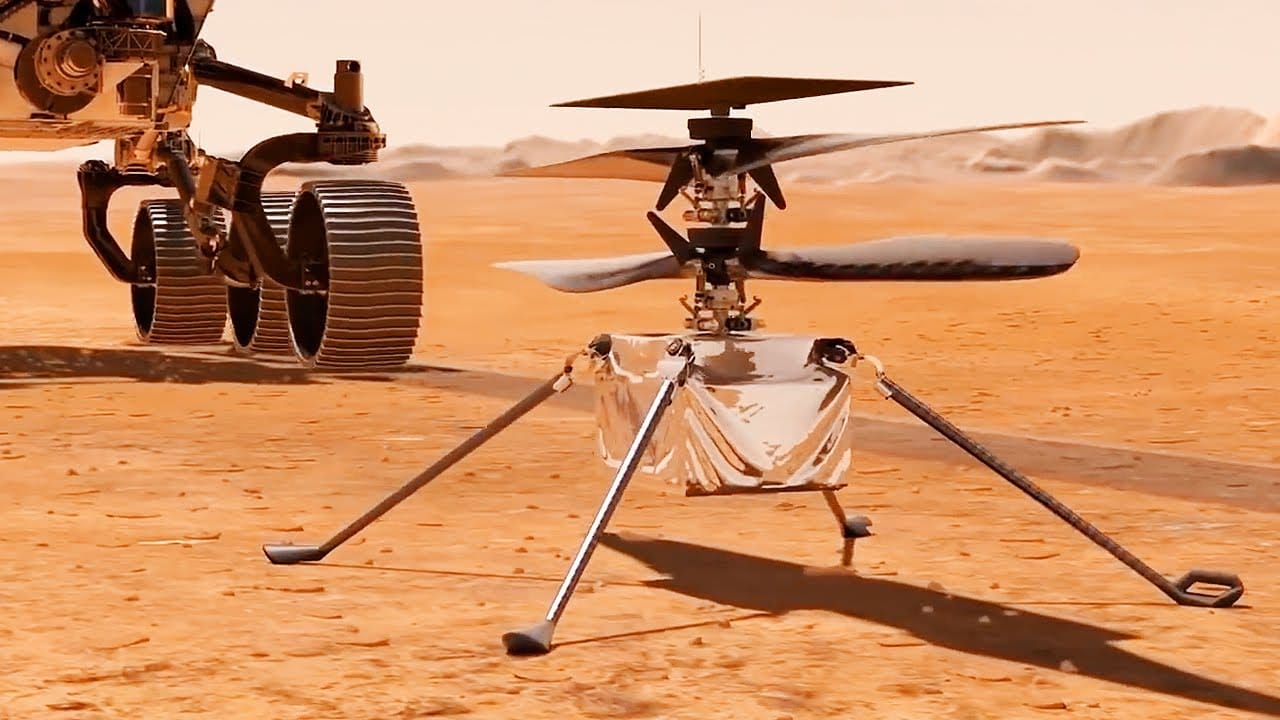
NASA has made significant strides in its exploration of Mars, and one of the standout achievements has been the successful operation of the Ingenuity helicopter. Launched alongside the Perseverance rover in 2020, Ingenuity has exceeded expectations by completing numerous flights on Mars, demonstrating the viability of powered flight in the thin Martian atmosphere. Building on this success, NASA has recently unveiled a new design for a Mars helicopter that promises to enhance the agency’s exploration capabilities.
The new helicopter design is a product of extensive research and development, aimed at addressing the challenges posed by the Martian environment. Mars has an atmosphere that is less than one percent the density of Earth’s, which presents unique difficulties for rotorcraft. The new design incorporates lessons learned from Ingenuity’s flights, which have provided invaluable data on aerodynamics, stability, and flight control in Martian conditions. By leveraging this knowledge, NASA aims to create a helicopter that can fly higher, longer, and with greater precision.
One of the key advancements in the new helicopter design is the incorporation of improved rotor blades. The blades are longer and more efficient, allowing for better lift and maneuverability. This enhancement is critical, as the thin atmosphere on Mars requires rotorcraft to operate at higher speeds and with greater agility to achieve flight. The new design also features a more robust frame, which is essential for withstanding the harsh conditions on the Martian surface, including dust storms and extreme temperatures.
In addition to physical design improvements, the new helicopter will be equipped with advanced sensors and cameras. These enhancements will enable the rotorcraft to conduct more complex missions, such as scouting terrain for future landers or rovers, capturing high-resolution images, and gathering data on the Martian atmosphere. The integration of these technologies will not only improve the helicopter’s operational capabilities but also provide scientists with valuable information that can inform future exploration strategies.
NASA’s plans for the new helicopter extend beyond mere design improvements. The agency is also exploring the potential for autonomous flight operations. While Ingenuity has demonstrated the ability to fly autonomously, the new helicopter aims to take this a step further by incorporating sophisticated navigation and obstacle avoidance systems. This capability would allow the helicopter to operate independently in challenging environments, reducing the need for constant communication with mission control on Earth.
The new Mars helicopter is part of a broader strategy to enhance exploration of the Red Planet. NASA envisions a future where multiple rotorcraft could work in tandem with rovers and landers, creating a coordinated network of exploration tools. This approach could significantly expand the reach of scientific investigations and provide a more comprehensive understanding of Mars’ geology, climate, and potential for past or present life.
As NASA prepares for the next phase of Mars exploration, the agency is also considering the implications of the new helicopter design for future missions. The lessons learned from Ingenuity and the upcoming rotorcraft could inform the design of aerial vehicles for other celestial bodies, such as the moons of Jupiter and Saturn, which also have atmospheres that could support powered flight. This adaptability highlights the versatility of rotorcraft technology in planetary exploration.
In conclusion, NASA’s unveiling of a new Mars helicopter design represents a significant advancement in the agency’s efforts to explore the Red Planet. By building upon the successes of Ingenuity, the new rotorcraft promises to enhance scientific investigations and expand our understanding of Mars. With improved aerodynamics, advanced technologies, and the potential for autonomous operations, this helicopter could play a crucial role in future missions, paving the way for deeper exploration of our neighboring planet.