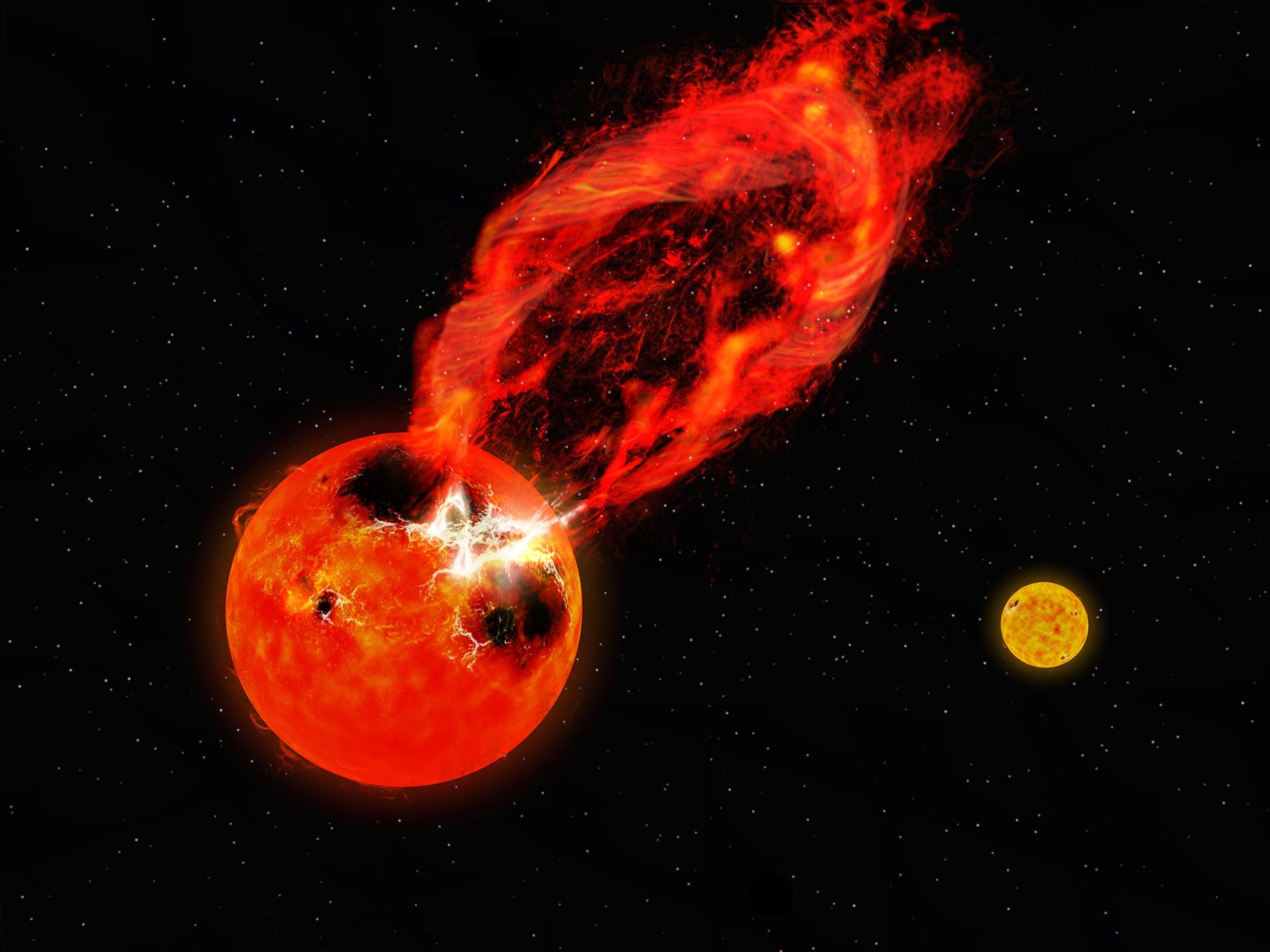
A team of astronomers has made a groundbreaking discovery about the frequency of superflares on stars similar to the Sun. Superflares are incredibly powerful explosions that release enormous amounts of energy, potentially affecting the habitability of nearby planets. The study, published in a leading scientific journal, suggests that these events occur about every 100 years on stars like our own.
To understand the significance of this discovery, it’s essential to know what superflares are and how they differ from regular solar flares. Solar flares are sudden and intense releases of energy from the surface of the Sun, often accompanied by coronal mass ejections (CMEs). These events can cause disruptions to Earth’s magnetic field, potentially affecting communication and navigation systems.
Superflares, on the other hand, are much more powerful than regular solar flares. They release an enormous amount of energy, often exceeding the energy output of tens of thousands of regular solar flares. The exact mechanisms that trigger superflares are still not fully understood, but scientists believe that they may be related to the buildup of magnetic energy in the star’s core.
The study, led by a team of researchers from the University of California, Los Angeles (UCLA), analyzed data from the Kepler space telescope and the Gaia spacecraft to investigate the frequency of superflares on stars similar to the Sun. The researchers focused on a type of star known as G-type main-sequence stars, which are similar in size and temperature to the Sun.
By analyzing the data, the team identified 14 superflares on 11 different stars, which allowed them to estimate the frequency of these events. According to their calculations, superflares occur about every 100 years on stars like our own. This frequency is much higher than previously thought, and it has significant implications for the search for life beyond Earth.
One of the most significant implications of this study is that superflares could affect the habitability of nearby planets. If a superflare were to occur on the Sun, it could potentially strip away the atmospheres of nearby planets, making it difficult for life to exist. This raises questions about the long-term habitability of planets in the habitable zones of stars like our own.
The study also has implications for the search for extraterrestrial intelligence (SETI). If superflares are common on stars like our own, it’s possible that advanced civilizations could be affected by these events. This raises questions about the likelihood of intelligent life existing elsewhere in the universe.
In addition to the implications for the search for life, the study also provides new insights into the behavior of stars like our own. The discovery of superflares on G-type main-sequence stars suggests that these events may be more common than previously thought, and it highlights the need for further research into the mechanisms that trigger these events.
The study’s lead author, Dr. Rachel Osten, emphasized the significance of the discovery, stating, “This study provides new insights into the behavior of stars like our own and highlights the need for further research into the mechanisms that trigger superflares. The frequency of these events is much higher than previously thought, and it has significant implications for the search for life beyond Earth.”
The study’s findings have been met with excitement and interest from the scientific community, and it’s likely to spark further research into the behavior of stars like our own. As scientists continue to explore the universe and search for life beyond Earth, the discovery of superflares on G-type main-sequence stars serves as a reminder of the complex and dynamic nature of the cosmos.

