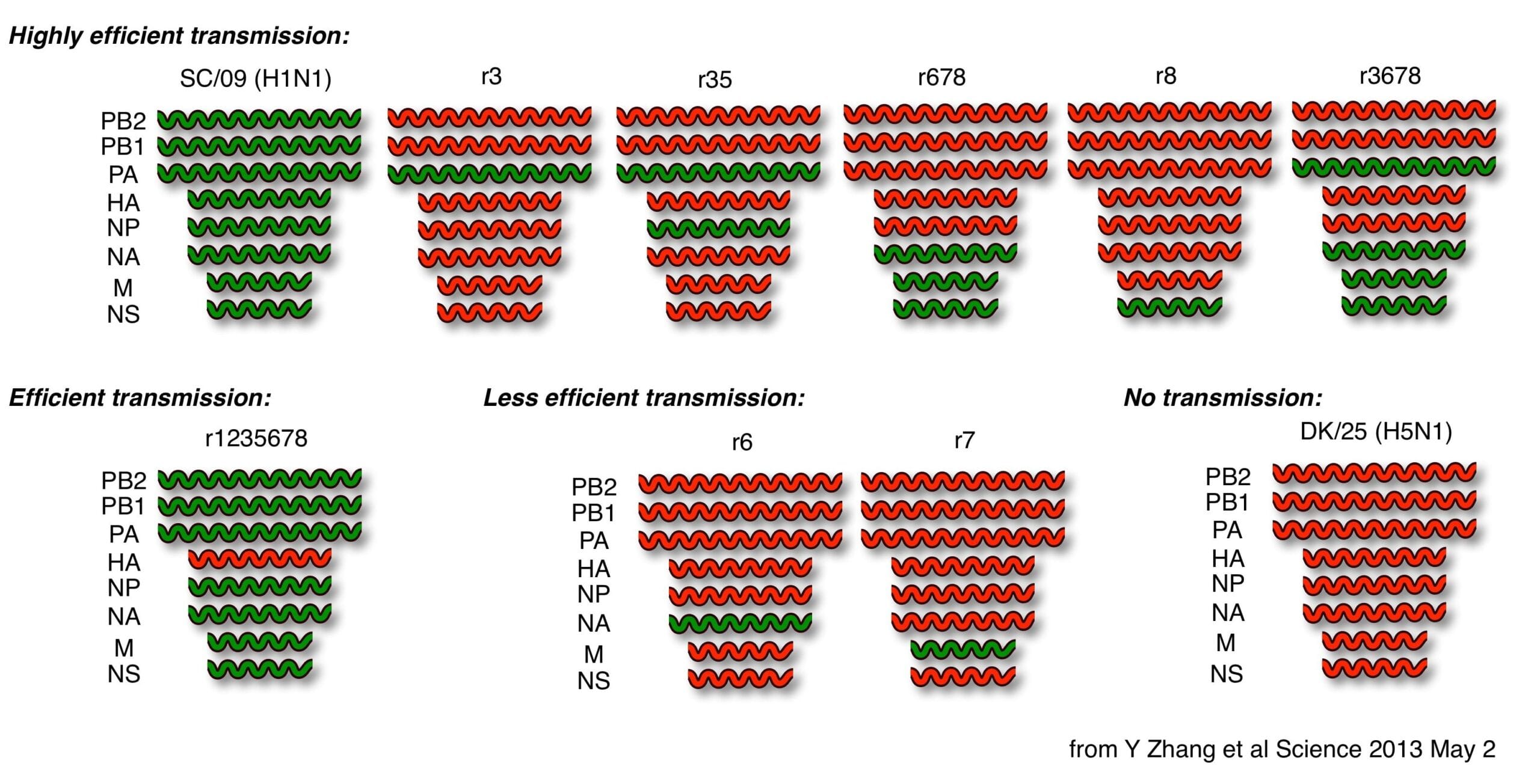
The H5N1 influenza virus, commonly known as bird flu, has been a major public health concern for over two decades. While the virus primarily affects birds, there have been sporadic cases of human infection, often resulting in severe illness and death. One of the key factors that has limited the spread of H5N1 in humans is its inability to efficiently transmit between people. However, a recent study published in the journal Nature Communications has identified a single mutation in the H5N1 influenza surface protein that could potentially change this.
The study, conducted by a team of researchers at the University of Wisconsin-Madison, used a combination of laboratory experiments and computational modeling to investigate the effects of specific mutations on the transmissibility of H5N1. The researchers focused on the hemagglutinin (HA) protein, which is responsible for binding to host cells and facilitating viral entry. By introducing specific mutations into the HA protein, the team was able to assess how these changes affected the virus’s ability to infect human cells.
One particular mutation, known as N224K, was found to significantly enhance the binding of the HA protein to human cells. This mutation involves a change from asparagine (N) to lysine (K) at position 224 of the HA protein. The researchers found that this mutation increased the affinity of the HA protein for human sialic acid, a molecule found on the surface of human cells that is recognized by the virus.
To assess the impact of this mutation on viral transmission, the researchers used a ferret model, which is commonly used to study influenza transmission. They found that the N224K mutation significantly increased the transmissibility of the virus between ferrets, suggesting that this mutation could potentially enable human-to-human transmission.
The implications of this study are significant. If the N224K mutation were to occur naturally in the H5N1 virus, it could potentially lead to a significant increase in human cases and facilitate the spread of the virus between people. This highlights the need for continued research into the transmission dynamics of H5N1 and the development of effective countermeasures, such as vaccines and antiviral therapies.
In addition to the public health implications, this study also provides valuable insights into the molecular mechanisms underlying influenza transmission. The findings of this study could be used to inform the development of novel therapeutic strategies, such as HA-based vaccines and antiviral therapies.
The study’s lead author, Dr. Yoshihiro Kawaoka, emphasized the importance of continued research into the transmission dynamics of H5N1. “Our study highlights the need for continued vigilance and research into the transmission dynamics of H5N1,” he said. “We must remain prepared to respond to any potential outbreaks and continue to develop effective countermeasures to prevent the spread of this highly pathogenic virus.”
In conclusion, the identification of the N224K mutation in the H5N1 influenza surface protein has significant implications for public health and highlights the need for continued research into the transmission dynamics of this highly pathogenic virus. Further studies are needed to fully understand the impact of this mutation on viral transmission and to develop effective countermeasures to prevent the spread of H5N1.