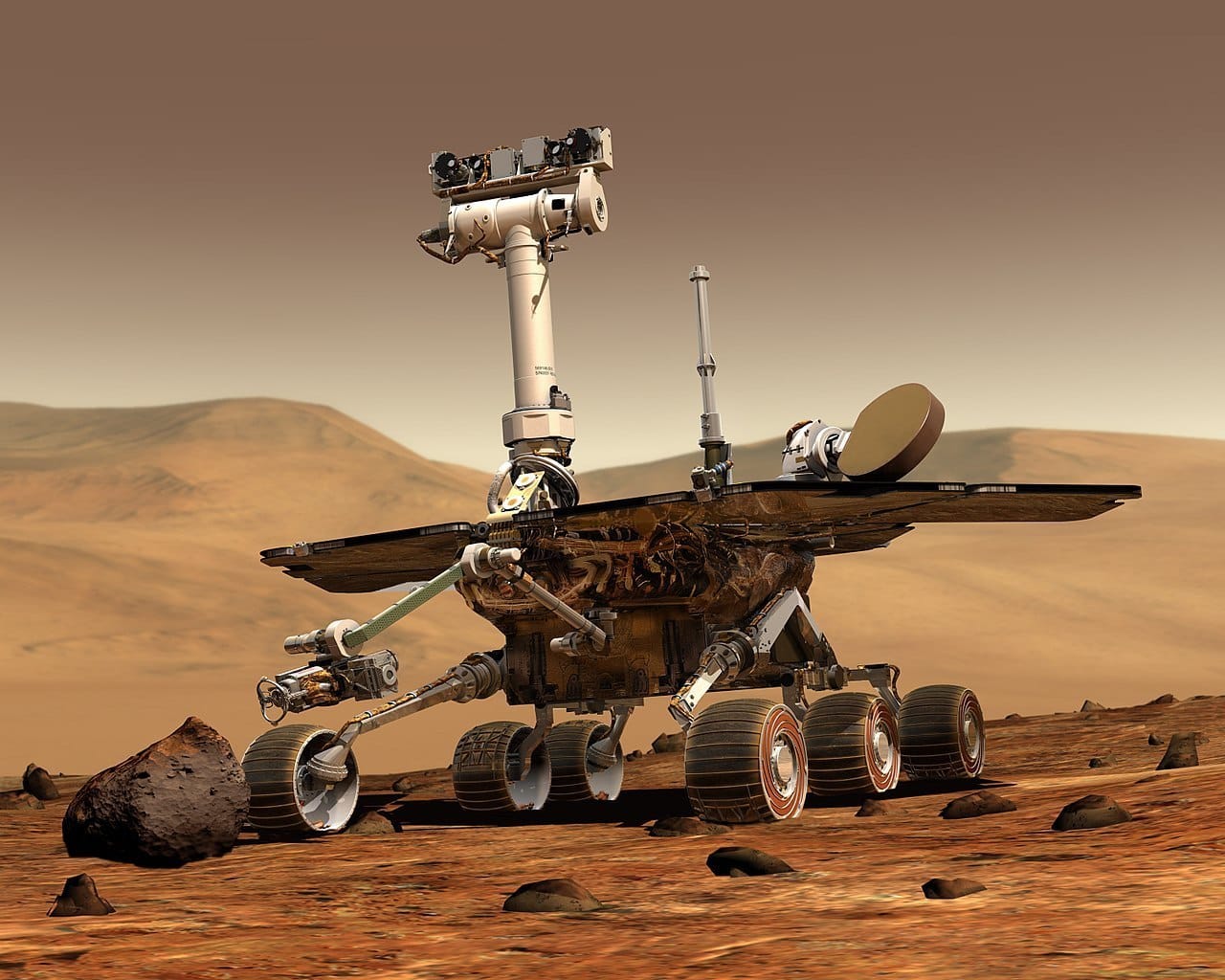
The quest for life beyond Earth has captivated scientists and the public alike for decades. As missions to Mars become increasingly sophisticated, researchers are exploring innovative technologies to enhance our understanding of the planet and its potential for harboring life. Among the most intriguing developments in this field is the training of doglike robots in the caves of the Northwest, a project that merges robotics with astrobiological exploration.
The robots, designed to mimic the agility and sensory capabilities of dogs, are being developed to navigate complex terrains and detect organic materials that may indicate past or present life on Mars. These training sessions take place in a series of caves that replicate the Martian environment, providing a controlled setting where the robots can hone their skills. The researchers have identified specific characteristics of the caves that make them suitable for this purpose, including their rugged terrain, varying temperatures, and limited light conditions.
One of the primary objectives of this training initiative is to enhance the robots’ olfactory capabilities. Just as bloodhounds are renowned for their exceptional sense of smell, these robots are equipped with advanced sensors that can detect chemical signatures associated with life. By training in the caves, the robots learn to navigate while simultaneously using their sensors to identify and analyze various organic compounds present in the environment. This dual focus on mobility and sensory detection is crucial, as Mars presents a unique set of challenges that require both agility and precision.
The research team is composed of experts from various fields, including robotics, artificial intelligence, and astrobiology. Their collaborative efforts are aimed at creating a new generation of robots that can operate autonomously in extraterrestrial environments. These robots are not only designed for exploration but also for conducting experiments and collecting data that can inform future missions. The integration of AI allows the robots to learn from their experiences, adapting their strategies based on the challenges they encounter during training.
The caves of the Northwest serve as an ideal training ground due to their geological features, which resemble the Martian landscape. The researchers have meticulously mapped out various routes and obstacles within the caves to simulate the conditions that the robots will face on Mars. This includes navigating through narrow passages, scaling rocky surfaces, and responding to unexpected changes in the environment. By subjecting the robots to these conditions, the team aims to ensure that they are well-prepared for the complexities of Martian exploration.
In addition to enhancing the robots’ physical capabilities, the training also focuses on refining their data analysis processes. As the robots collect samples and analyze their surroundings, they generate vast amounts of data that must be processed in real-time. The research team is developing algorithms that enable the robots to quickly interpret this data, allowing them to make informed decisions during their missions. This capability is essential for identifying potential signs of life, as the robots must be able to distinguish between organic materials and inorganic substances.
The implications of this research extend beyond Mars exploration. The technology being developed for these doglike robots could have applications in various fields on Earth, including search and rescue operations, environmental monitoring, and disaster response. The ability to navigate challenging terrains and detect specific materials can significantly enhance the efficiency and effectiveness of these efforts. As such, the research team is exploring partnerships with organizations that could benefit from this technology in terrestrial applications.
Public interest in the project has been significant, with many expressing excitement about the potential for discovering life on Mars. The concept of using robotic companions that resemble dogs resonates with people, as it evokes a sense of familiarity and companionship. This connection may also foster greater public engagement with space exploration, encouraging support for future missions and research initiatives.
As the training continues, the research team is optimistic about the potential outcomes of their work. They envision a future where these robots play a critical role in Mars exploration, gathering data that could reshape our understanding of the planet and its history. The prospect of finding signs of life, even in the form of microbial organisms, would have profound implications for humanity’s place in the universe.
In conclusion, the training of doglike robots in the Northwest caves represents a significant advancement in the field of astrobiology and robotics. By equipping these machines with the ability to navigate complex environments and detect organic materials, researchers are paving the way for more effective exploration of Mars. As they continue to refine their technology and methodologies, the possibility of uncovering the secrets of the Red Planet becomes increasingly tangible.