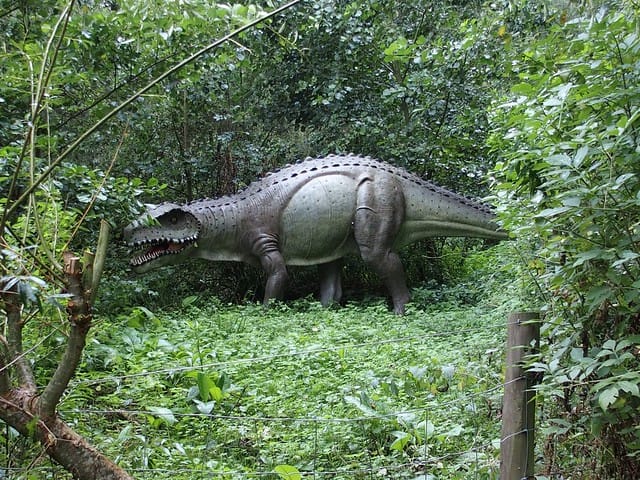
In a groundbreaking discovery, paleontologists have unearthed a dinosaur highway in England that dates back an astonishing 166 million years. This ancient pathway, located in a quarry in the Cotswolds, offers a rare glimpse into the lives of dinosaurs during the Middle Jurassic period. The significance of this find extends beyond mere curiosity; it provides valuable insights into the behavior, movement, and environmental conditions of dinosaurs during a time when they roamed the Earth.
The excavation site, which has been under investigation for several years, revealed a series of well-preserved tracks left by various dinosaur species. These tracks, some measuring over a foot in length, indicate the presence of both herbivorous and carnivorous dinosaurs that traversed the area. Paleontologists believe that the highway served as a migration route or a pathway to feeding grounds, highlighting the social behaviors and interactions of these ancient creatures.
The discovery of the dinosaur highway is particularly significant because it sheds light on the ecological dynamics of the Middle Jurassic period, a time characterized by a diverse array of dinosaur species. The findings suggest that these dinosaurs were not solitary creatures but rather moved in groups, potentially for reasons such as safety from predators or the search for food. This challenges previous notions that dinosaurs were primarily solitary animals, offering a new perspective on their social structures.
In addition to the tracks themselves, the surrounding geology of the site provides important context for understanding the environment in which these dinosaurs lived. The sedimentary layers indicate that the area was once a lush, swampy environment, rich in vegetation and teeming with life. This habitat would have supported a variety of plant species, which in turn provided sustenance for herbivorous dinosaurs. The presence of carnivorous tracks suggests that these predators were also part of the ecosystem, preying on the herbivores that inhabited the area.
The research team, composed of paleontologists and geologists, utilized advanced imaging techniques to analyze the tracks and the surrounding geology. This multidisciplinary approach allowed them to create a detailed picture of the environment and the behaviors of the dinosaurs that once roamed the area. The findings have been documented in a comprehensive study, which is set to be published in a leading paleontological journal.
The discovery of the dinosaur highway has generated excitement within the scientific community and among amateur paleontologists alike. It is not only a testament to the rich prehistoric life that once existed in England but also serves as a reminder of the importance of continued exploration and excavation in understanding our planet’s history. The site is expected to attract researchers and tourists interested in paleontology, further promoting awareness and appreciation for the field.
Furthermore, the discovery has implications for understanding the evolutionary history of dinosaurs. By studying the tracks and the species that created them, scientists can gain insights into the physical characteristics and adaptations of these creatures. For example, the size and shape of the tracks can provide information about the gait and locomotion of different species, contributing to a more comprehensive understanding of dinosaur evolution.
As excavations continue at the site, researchers are hopeful that additional discoveries will be made. The potential for finding more tracks, fossils, or even evidence of nesting sites could further enrich our understanding of dinosaur behavior and ecology. Each new finding adds another piece to the puzzle of the complex interactions that took place in prehistoric ecosystems.
In conclusion, the discovery of the 166-million-year-old dinosaur highway in England marks a significant milestone in paleontological research. It not only enhances our understanding of dinosaur behavior and ecology but also underscores the importance of continued exploration of our planet’s geological history. As scientists delve deeper into this ancient world, they are likely to uncover even more fascinating insights that will illuminate the lives of these magnificent creatures that once roamed the Earth.