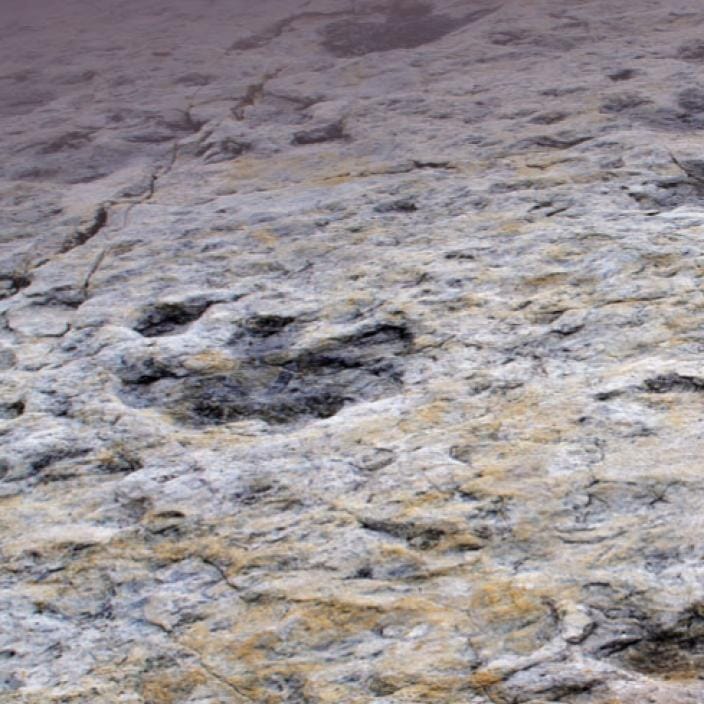
In a groundbreaking discovery that has captured the attention of paleontologists and the public alike, scientists have identified dinosaur footprints in the UK that date back approximately 166 million years. This remarkable finding, which occurred along a coastal area, offers a unique glimpse into the lives of these ancient creatures during the Jurassic period, a time characterized by a rich diversity of dinosaur species.
The footprints were uncovered during routine geological surveys conducted by researchers from the University of Bristol and other collaborating institutions. As they examined the sedimentary rocks along the coastline, they noticed distinct impressions that closely resembled the footprints of large theropod dinosaurs. These dinosaurs, which were primarily carnivorous, are known for their bipedal locomotion and were among the dominant predators of their time.
The significance of this discovery lies not only in the age of the footprints but also in what they reveal about the behavior of dinosaurs during the Jurassic period. The tracks suggest that these creatures were likely moving in a group, indicating possible social behavior. This finding aligns with other evidence suggesting that many dinosaur species exhibited social structures, which may have contributed to their survival and success as a group.
In addition to providing insights into social behavior, the footprints also offer valuable information regarding the environment in which these dinosaurs lived. The sedimentary context of the footprints suggests that the area was once a coastal environment, possibly a tidal flat or a sandy beach. This information is crucial for reconstructing the ecological conditions of the Jurassic period and understanding how these dinosaurs adapted to their surroundings.
The discovery has sparked interest among researchers worldwide, who are eager to study the tracks further. Detailed analysis of the footprints, including their size, depth, and spacing, will help scientists determine the species of dinosaur that made them. Such studies could also shed light on the locomotion and speed of these ancient animals, enhancing our understanding of their physical capabilities.
Moreover, the discovery of these ancient tracks contributes to the growing body of evidence regarding the distribution of dinosaur species across ancient landscapes. It is believed that this region of the UK was once part of a larger landmass that supported a diverse range of dinosaur species. As researchers continue to excavate and analyze the area, they hope to uncover more tracks and fossils that can provide further insights into the biodiversity of the Jurassic period.
The implications of this discovery extend beyond academic interest; they also hold potential for educational and tourism opportunities. As awareness of the find spreads, there may be increased interest in the region as a destination for those fascinated by paleontology and natural history. Local authorities and conservation groups may consider developing educational programs or guided tours to highlight the significance of the discovery and promote awareness of the area’s geological heritage.
In conclusion, the recent discovery of 166-million-year-old dinosaur tracks in the UK marks a significant milestone in the field of paleontology. These footprints not only enhance our understanding of dinosaur behavior and ecology during the Jurassic period but also open new avenues for research and public engagement. As scientists continue to study these ancient tracks, they will undoubtedly uncover more information that will enrich our knowledge of these fascinating creatures that once roamed the Earth.

