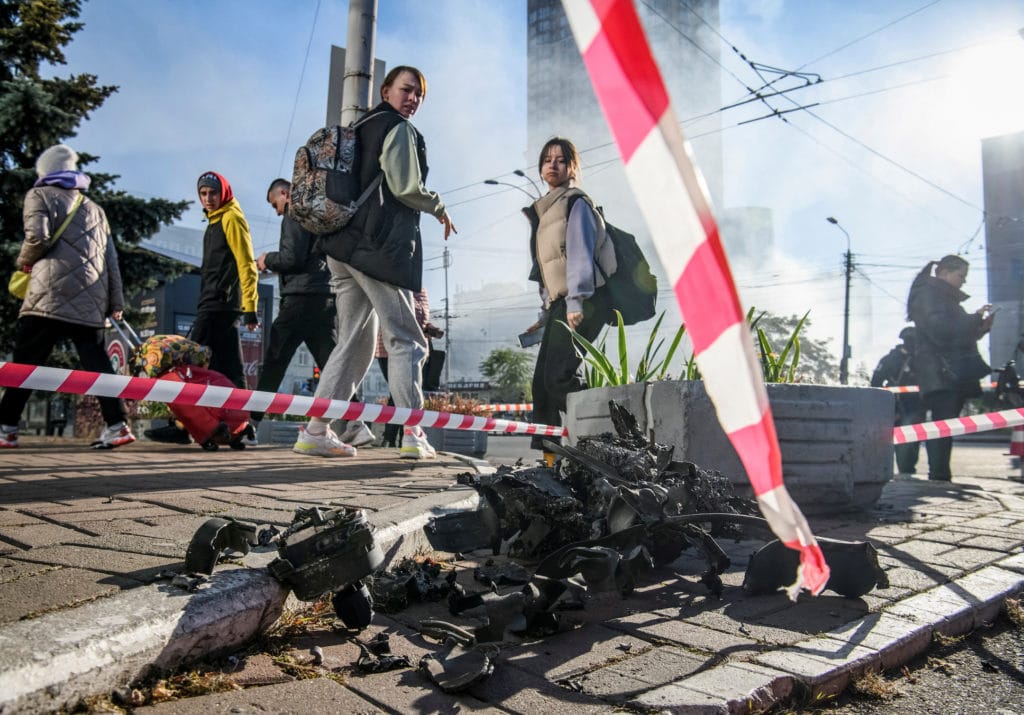
In a significant development in the ongoing conflict between Ukraine and Russia, Ukrainian forces have executed one of their largest drone attacks to date, employing advanced missiles provided by the United States and the United Kingdom. This operation represents a marked escalation in military actions and highlights the evolving dynamics of the conflict, which has drawn international attention and concern.
The drone attack, which occurred in the early hours of the morning, targeted several key military installations and logistical hubs within Russian territory. Ukrainian officials have stated that the operation was aimed at disrupting supply lines and diminishing the operational capabilities of Russian forces. The use of US and British missiles in this context is particularly noteworthy, as it reflects the increasing military support that Ukraine has received from its Western allies since the onset of the conflict.
The missiles, known for their precision and effectiveness, have been a crucial component of Ukraine’s military strategy. By utilizing these advanced weapons, Ukraine aims to enhance its defensive and offensive capabilities, allowing it to respond more effectively to Russian military actions. The decision to launch such a large-scale drone attack indicates a shift in Ukraine’s approach, as it seeks to take the initiative in the conflict rather than merely responding to Russian advances.
In recent months, the conflict has seen a series of escalations, with both sides engaging in intensified military operations. The Ukrainian government has been vocal about its need for continued support from Western nations, emphasizing that the provision of advanced weaponry is essential for its defense against Russian aggression. The recent drone attack serves as a demonstration of Ukraine’s commitment to utilizing the resources provided by its allies to achieve its military objectives.
The international community has been closely monitoring the situation, with various nations expressing their support for Ukraine’s right to defend itself. The use of US and British missiles in this operation has sparked discussions about the implications of such military assistance and the potential for further escalation in the conflict. Analysts have noted that while the provision of advanced weaponry can bolster Ukraine’s defenses, it also raises the stakes for all parties involved, as Russia may respond with increased military actions of its own.
In response to the drone attacks, Russian officials have condemned the actions of Ukraine, labeling them as acts of aggression. The Kremlin has vowed to take necessary measures to protect its territory and has indicated that it will not tolerate such incursions. This rhetoric underscores the heightened tensions between the two nations and the potential for further military confrontations in the region.
As the conflict continues to evolve, the role of international support for Ukraine remains a critical factor. The United States and the United Kingdom have reiterated their commitment to assisting Ukraine in its defense efforts, providing not only advanced weaponry but also training and intelligence support. This collaboration is seen as vital for Ukraine’s ability to sustain its military operations and counter Russian advances effectively.
The implications of this latest military operation extend beyond the immediate conflict. The use of advanced missiles and drones signifies a shift in modern warfare, where technology plays a pivotal role in determining the outcomes of military engagements. As both Ukraine and Russia adapt to these new realities, the nature of the conflict is likely to change, with an increased emphasis on precision strikes and the use of unmanned systems.
In conclusion, Ukraine’s recent military operations, characterized by the use of US and British missiles and one of the largest drone attacks to date, mark a significant escalation in the ongoing conflict with Russia. This development highlights the deepening military cooperation between Ukraine and its Western allies, as well as the evolving nature of warfare in the modern era. As the situation unfolds, the international community will continue to watch closely, aware of the potential consequences for regional stability and security.


