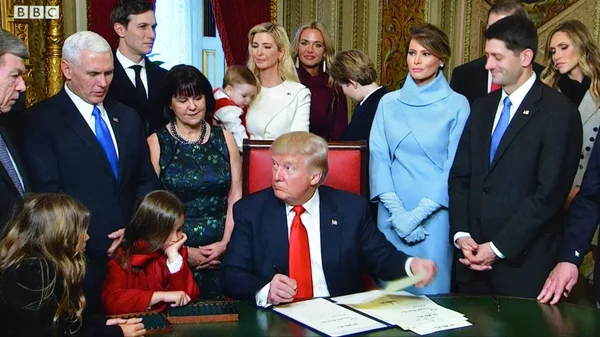
On January 20, 2017, President Donald Trump took office and immediately set a tone of change regarding immigration policy in the United States. Within hours of his inauguration, he signed a series of executive orders that marked a significant shift in the country’s approach to immigration. These orders were designed to enhance border security, limit the number of refugees allowed into the country, and prioritize the deportation of undocumented immigrants.
One of the most notable orders was aimed at constructing a wall along the U.S.-Mexico border. This initiative had been a central theme of Trump’s campaign, and the executive order directed federal agencies to begin the planning and construction process. The wall was intended to deter illegal immigration and drug trafficking, and it signaled a commitment to a more aggressive stance on border security.
In addition to the border wall, Trump’s orders included a directive to increase the number of Immigration and Customs Enforcement (ICE) agents. This move was aimed at bolstering the federal government’s ability to enforce immigration laws and carry out deportations. The administration emphasized that the focus would be on individuals with criminal records, but the broader implications raised concerns among immigrant communities about the potential for increased raids and detentions.
Another significant aspect of the executive orders was the suspension of the U.S. Refugee Admissions Program for 120 days. This suspension was part of a broader effort to review and revise the vetting process for refugees entering the country. The administration argued that the changes were necessary to ensure national security, but critics expressed concern that the suspension would leave vulnerable populations, including those fleeing war and persecution, without safe haven.
The orders also included a provision to cut federal funding to sanctuary cities—municipalities that limit their cooperation with federal immigration enforcement. This move was intended to pressure local governments to comply with federal immigration laws, but it raised questions about the balance of power between state and federal authorities. Many mayors and local leaders expressed their intention to resist such measures, citing the importance of community trust and public safety.
The immediate aftermath of these executive orders saw a surge of protests across the country. Advocacy groups, civil rights organizations, and concerned citizens mobilized to voice their opposition to the new policies. Demonstrations took place at airports, city halls, and other public spaces, with participants calling for the protection of immigrant rights and the rejection of what they viewed as discriminatory practices.
Legal challenges to the executive orders quickly emerged. Several states and organizations filed lawsuits arguing that the measures were unconstitutional and violated the rights of individuals. The legal battles highlighted the contentious nature of immigration policy in the United States and the deep divisions within the country regarding how to address the issue.
As the Trump administration moved forward with its immigration agenda, the impact of these orders began to unfold. The changes led to a significant decrease in the number of refugees admitted to the United States, as well as an increase in deportations. The administration’s focus on enforcement and border security reshaped the landscape of immigration, leading to heightened fears among undocumented immigrants and their families.
The executive orders signed on that first day in office set the stage for a broader debate about immigration in the United States. Supporters of the measures argued that they were necessary to protect national security and uphold the rule of law. Conversely, opponents contended that the policies were harmful and counterproductive, undermining the values of compassion and inclusivity that have historically defined the nation.
In the months and years that followed, the Trump administration continued to implement and refine its immigration policies, leading to ongoing discussions and controversies. The executive orders signed on Day One were just the beginning of a complex and evolving narrative surrounding immigration in America, one that would have lasting implications for millions of individuals and families.
As the nation grapples with the challenges of immigration, the actions taken by President Trump on his first day in office remain a pivotal moment in the ongoing discourse. The implications of these policies continue to resonate, shaping the experiences of immigrants and influencing the political landscape in the United States.