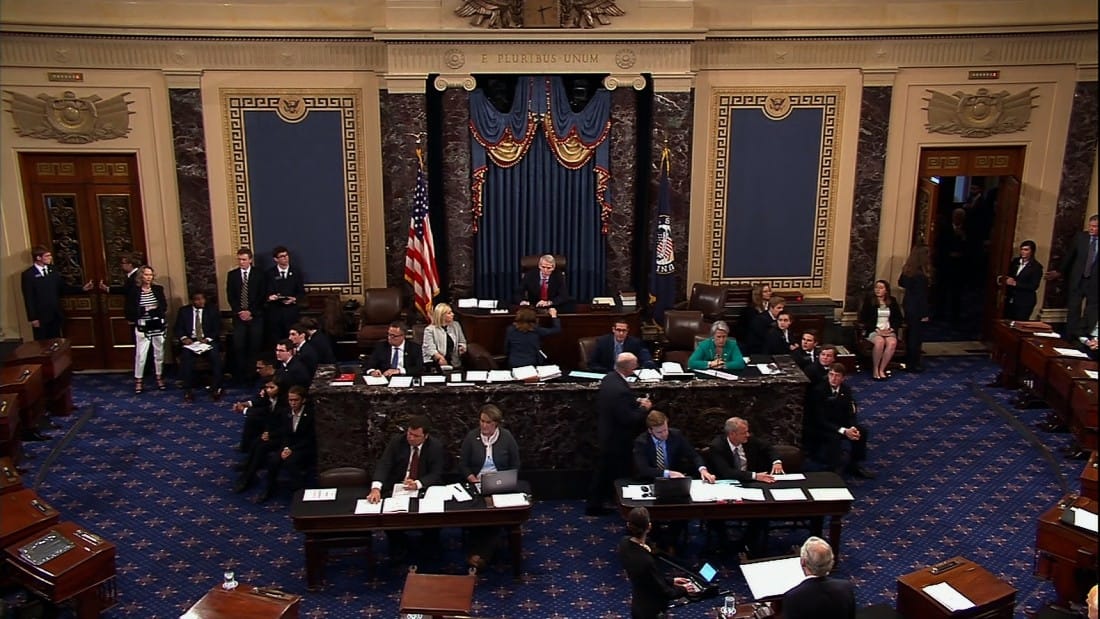
In the evolving landscape of American politics, the filibuster has emerged as a critical tool within the Senate, serving as a mechanism that allows for extended debate and requires a supermajority to close discussion on a bill. Senator John Thune, the Senate Minority Whip, has recently reaffirmed his commitment to preserving the filibuster, asserting that it plays an essential role in fostering bipartisan dialogue and ensuring that legislation is thoroughly vetted before becoming law.
The filibuster, which has been a part of Senate procedure for over a century, allows a minority of senators to prolong debate on a piece of legislation, effectively blocking a vote unless a supermajority of 60 votes is achieved to invoke cloture. This procedural tactic has been a point of contention in recent years, especially as political polarization has intensified. Advocates for reform argue that the filibuster hinders progress on crucial issues, while supporters, including Thune, contend that it is a vital safeguard against the whims of a simple majority.
Senator Thune’s remarks come at a time when the future of the filibuster is under scrutiny. Following the 2020 elections and the subsequent shift in Senate control, discussions about modifying or abolishing the filibuster have gained momentum among some Democratic lawmakers. They argue that its elimination could facilitate the passage of key legislative priorities, such as voting rights and climate change initiatives. However, Thune and other Republican leaders maintain that the filibuster is essential for maintaining a check on majority power and fostering collaboration across party lines.
In his address, Thune highlighted several historical instances where the filibuster has played a pivotal role in shaping legislation. He pointed to significant civil rights legislation in the 1960s, where extended debate allowed for amendments and discussions that ultimately strengthened the final bills. Thune emphasized that the filibuster encourages senators to work together, fostering an environment where compromise is necessary for advancing legislation. He argued that without the filibuster, the Senate could devolve into a body where partisan agendas dominate, undermining the institution’s foundational purpose.
Thune’s defense of the filibuster also reflects broader concerns about the erosion of bipartisanship in American politics. Many observers note that the increasing polarization in Congress has led to a decline in collaborative efforts across party lines. By preserving the filibuster, Thune believes that senators will be incentivized to engage in meaningful dialogue and seek common ground, rather than resorting to unilateral decision-making.
The senator’s commitment to the filibuster has garnered support from various quarters, including some moderate Democrats who share concerns about the potential consequences of abolishing the procedure. They argue that maintaining the filibuster could help prevent future legislative overreach and ensure that diverse perspectives are considered in the lawmaking process. This sentiment underscores the complexity of the issue, as lawmakers navigate the balance between efficiency and deliberation in a highly polarized environment.
As discussions around the filibuster continue, Thune’s position will likely influence the broader conversation about Senate rules and procedures. His assertion that the filibuster will survive under his watch signals a determination to uphold a tradition that many believe is integral to the Senate’s identity as a deliberative body. The ongoing debates will undoubtedly shape the legislative landscape in the coming years, as lawmakers grapple with the implications of their decisions on the future of the filibuster and the functioning of the Senate.
In conclusion, Senator John Thune’s advocacy for the filibuster reflects a commitment to preserving a legislative process that values debate, compromise, and bipartisanship. As the Senate navigates the challenges of a polarized political climate, the filibuster remains a focal point of contention, with significant implications for the future of American governance. Thune’s assurances that the filibuster will endure under his leadership serve as a reminder of the ongoing struggle to balance efficiency with the need for thorough deliberation in the legislative process.