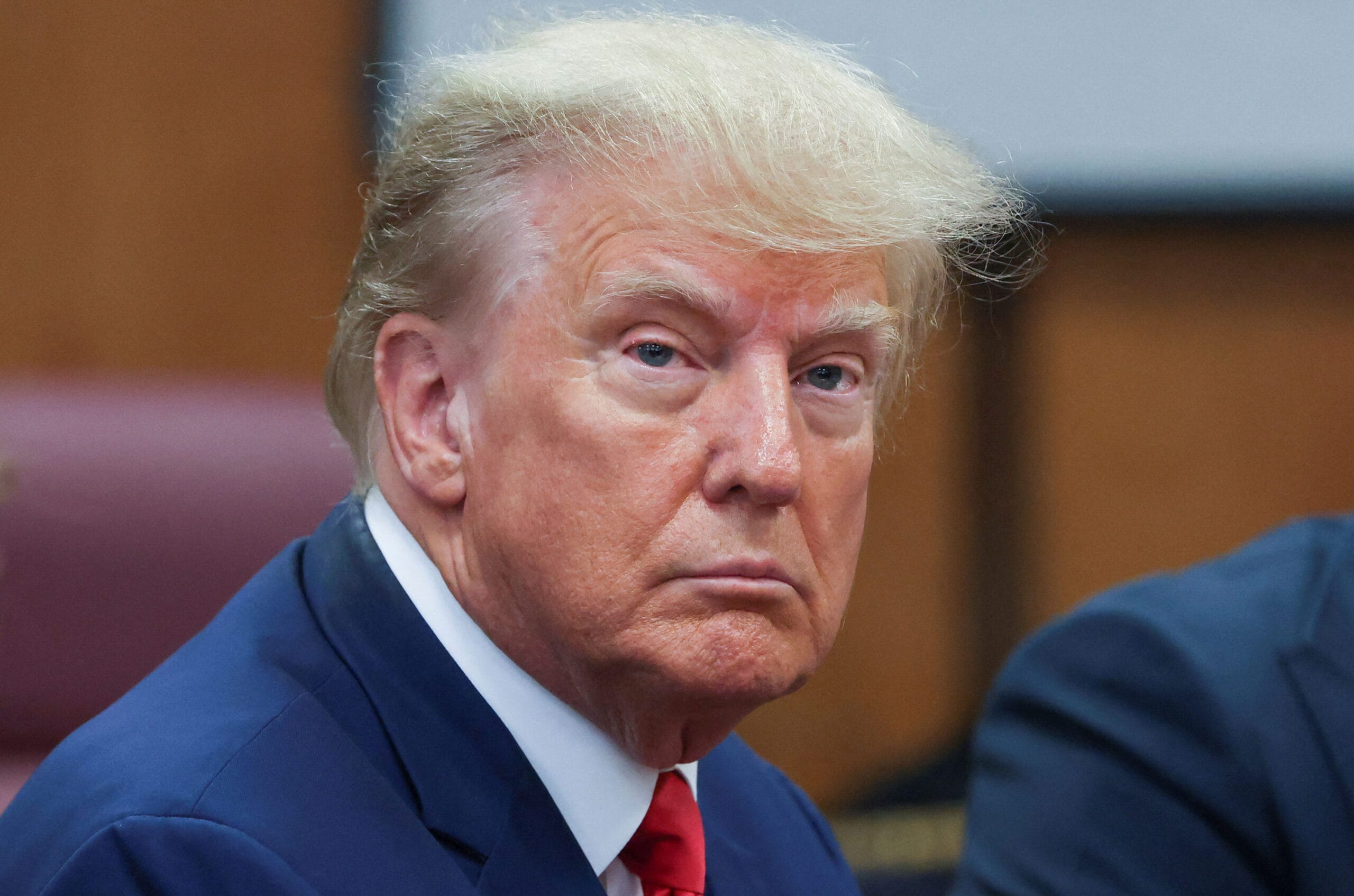
In a significant ruling, a New York judge has determined that former President Donald Trump does not possess legal immunity in relation to a hush money payment made during the 2016 presidential campaign. This judgment emerged from a case that centers around a $130,000 payment allegedly made to adult film actress Stormy Daniels to suppress information about an alleged affair between the two. As legal proceedings continue, this ruling not only holds implications for Trump personally but could also reverberate through the political landscape as he pursues another presidential campaign in 2024.
The decision, delivered in the New York State Supreme Court, comes as part of an ongoing investigation led by Manhattan District Attorney Alvin Bragg. The case revolves around whether the payment constituted a violation of election laws, as it was purportedly designed to prevent potentially damaging information from surfacing ahead of the election. The judge’s ruling dismisses Trump’s claim of immunity, which he had argued was in place due to his former status as president and the complexities surrounding the case.
Legal experts have noted that the ruling is significant for several reasons. First, it underscores the principle that no individual, regardless of their former position, is above the law. Trump’s assertion of immunity raised eyebrows among legal scholars, who argued that it could set a dangerous precedent if allowed to stand. The judge’s ruling reinforces that the legal system must be able to hold individuals accountable, regardless of their political stature.
Moreover, the decision highlights the intricate legal framework governing campaign finance and election law. The claim that the hush money payment was not properly disclosed as part of Trump’s campaign expenditures is central to the investigation. If Bragg’s office can prove that the payment was intended to influence the election by silencing Daniels, it could lead to serious ramifications for Trump and his campaign.
Trump has consistently denied any wrongdoing in connection with the payment, labeling it a “witch hunt” aimed at undermining his political ambitions. His legal team has indicated that they plan to appeal the judge’s ruling, seeking to protect what they describe as an essential right to immunity for a president. The potential appeal adds another layer of complexity to an already contentious legal scenario.
As the proceedings progress, Trump’s political future hangs in the balance. With the 2024 presidential election approaching, any legal setbacks could impact his candidacy as he seeks to secure the Republican nomination. Polling indicates that while many of his supporters remain steadfast, legal challenges could sway undecided voters and those who may have reservations about his ability to lead amidst ongoing legal troubles.
Moreover, this case is not Trump’s only legal challenge. He is facing several other investigations and lawsuits that could further complicate his political life. His presidency was marked by numerous controversies, many of which have now taken on new significance as he embarks on another campaign. As he navigates these turbulent waters, his legal team must balance his public image while engaging in a robust defense against multiple legal challenges.
The ruling may also serve as a precedent for other potential cases involving political figures navigating legal disputes related to their conduct in and out of office. As other politicians observe Trump’s case, they may need to reevaluate their strategies concerning legal vulnerabilities that arise when campaigning for office.
The stakes may extend beyond Trump himself. The ramifications of this ruling may echo through the Republican Party, potentially influencing its strategy for the upcoming election cycle. As Trump takes center stage in the party, the push and pull between supporting him and navigating the legal issues surrounding him could create divisions among party members.
Trump’s supporters have already begun to rally around him, expressing outrage at what they perceive as politically motivated prosecutions. They argue that these legal challenges are an attempt to discredit a popular leader who has consistently championed conservative values. Concurrently, opponents of Trump welcome the court’s decision as a step toward accountability in American politics.
As this case unfolds, observers will be closely monitoring its impact on public opinion, voter sentiment, and future legal proceedings involving high-profile political figures. The outcome could provide insight into the balance of power within the legal and political realms, reinforcing the necessity of accountability and transparency in government affairs.
In conclusion, the New York judge’s ruling that Trump does not have immunity from prosecution marks a critical juncture not only in his legal battles but also in the broader context of American politics. As the legal landscape becomes more perilous for the former president, the implications of this decision may reshape the dynamics of the upcoming election cycle and contribute to the ongoing dialogue surrounding accountability in leadership.