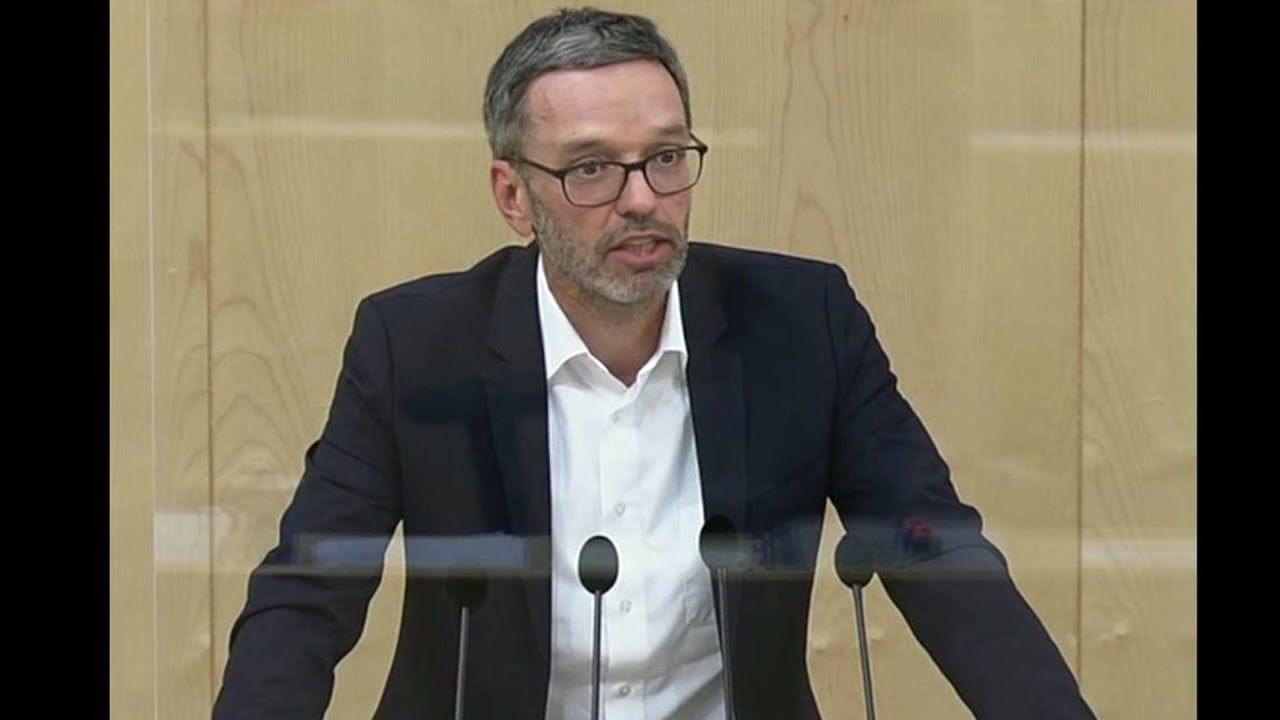
In a pivotal moment for Austrian politics, Herbert Kickl, the leader of the far-right Freedom Party (FPÖ), has emerged as a key figure in the formation of a new government. Following recent elections, where the FPÖ garnered a substantial share of the vote, Kickl’s party is in a position to influence the direction of the country significantly. This development is not only a reflection of changing voter sentiments but also highlights the growing prominence of right-wing populism in Europe.
The elections that led to this juncture were marked by a surge in support for the FPÖ, which has campaigned on a platform emphasizing stricter immigration controls, national sovereignty, and a commitment to Austrian cultural values. Kickl, a seasoned politician and former interior minister, has been a polarizing figure in Austrian politics, known for his outspoken views and controversial statements regarding immigration and integration. His leadership style and rhetoric resonate with a segment of the population that feels disillusioned by traditional political parties and concerned about the impacts of globalization.
As negotiations to form a coalition government commence, Kickl faces the challenge of aligning his party’s interests with those of potential coalition partners. The political landscape in Austria is characterized by a multi-party system, and coalition-building is often necessary to achieve a governing majority. While the FPÖ has previously partnered with other right-leaning parties, the current political climate may necessitate broader alliances, including centrist parties.
The implications of Kickl’s potential government formation extend beyond Austria’s borders. Observers in the European Union and beyond are watching closely, as the rise of far-right parties has been a notable trend across several member states. The FPÖ’s ascent could embolden similar movements in other countries, potentially reshaping the political discourse within the EU. Issues such as immigration policy, economic management, and responses to climate change are likely to be at the forefront of discussions in any coalition agreement.
In addition to domestic policy considerations, the international community is keenly aware of the potential shifts in Austria’s foreign relations under a Kickl-led government. The FPÖ has historically taken a skeptical stance towards the EU, advocating for a more nationalist approach to governance. This could result in a reevaluation of Austria’s commitments to European integration and cooperation, particularly concerning migration and border control policies.
Kickl’s leadership style, characterized by direct communication and a focus on populist themes, has garnered him a loyal following. However, it has also drawn criticism from opponents who argue that his rhetoric can be divisive and detrimental to social cohesion. As he seeks to govern, Kickl will need to navigate these complexities, balancing the demands of his base with the need for broader public support.
The political dynamics in Austria are further complicated by the presence of other parties that have significant representation in the National Council. The Social Democrats (SPÖ) and the Austrian People’s Party (ÖVP) remain formidable opponents, and their responses to Kickl’s rise will be crucial in shaping the political landscape. Both parties have expressed their commitment to countering the influence of the far-right and may seek to mobilize their bases in response to the FPÖ’s agenda.
Public opinion is also a critical factor in the unfolding situation. Recent polls indicate a mixed response to the idea of a government led by Kickl, with some segments of the population expressing support for his policies, particularly regarding immigration. However, there is also a significant portion of the electorate that remains wary of the implications of far-right governance. As coalition talks progress, the ability of Kickl and his potential partners to address these concerns will be vital for maintaining public confidence in the new government.
In conclusion, Herbert Kickl’s opportunity to form a government in Austria represents a significant shift in the country’s political landscape. As negotiations unfold, the implications for domestic and international policy are profound. The outcome of these discussions will not only impact Austria but may also reverberate across Europe, influencing the trajectory of right-wing populism and its role in shaping the future of the European Union. As the political climate evolves, all eyes will be on Austria to see how this new chapter in governance unfolds.