
Scientists have discovered a groundbreaking new class of quantum states within engineered graphene structures. This finding, made by researchers from prominent universities, could significantly impact the future of quantum computing and materials science by introducing topological electronic crystals.
Category: Science

Scientists Unlock New Quantum Frontiers in Graphene Research
Researchers have unveiled a groundbreaking class of quantum states in graphene, revealing its potential to revolutionize materials science and quantum technology. The discovery, made possible through advanced engineering of graphene layers, highlights the material’s ability to host exotic electronic phenomena.

NIH Announces Immediate Reduction of Billions in Biomedical Research Funds
The National Institutes of Health has announced an immediate cut of billions of dollars in biomedical research funding, significantly affecting institutions reliant on federal grants. The new policy limits indirect cost allocations for research projects, sparking concern within the scientific and medical communities.

NASA Watchdog Panel Highlights Challenges in Boeing Starliner’s Future
The annual Aerospace Safety Advisory Panel report raises concerns over recently discovered issues with Boeing’s CST-100 Starliner spacecraft. The findings call into question its role in NASA’s future plans, despite ongoing progress in addressing known problems.
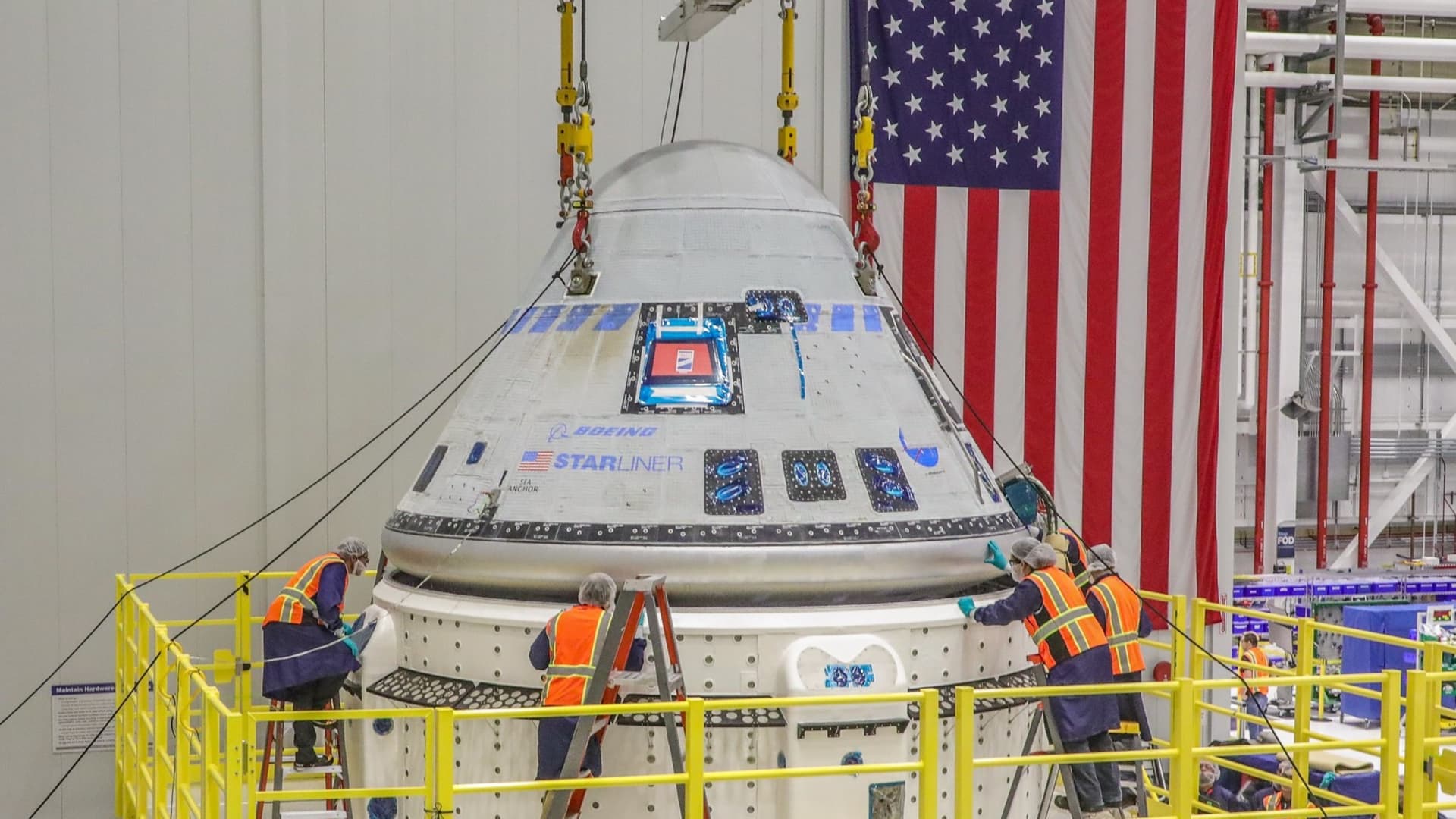
NASA Watchdog Panel Reveals New Boeing Starliner Safety Issue, Casting Doubts on Program’s Future
The latest safety report from NASA’s Aerospace Safety Advisory Panel has disclosed a concerning safety issue in Boeing’s CST-100 Starliner spacecraft. The finding raises questions about the viability of the space vehicle in NASA’s future missions, delaying its deployment and adding to Boeing’s existing challenges in securing its role in manned space exploration.

Newly Discovered Asteroid Gains Focus as Impact Risk to Earth Rises
Scientists have identified a newly discovered asteroid, named 2024 YR4, with a slightly increased risk of impacting Earth. With a current estimated chance of 2.2% of hitting our planet on December 22, 2032, astronomers are closely monitoring its trajectory while maintaining that the overall risk remains low.

Annual NASA Safety Report Highlights Persistent Challenges with Boeing Starliner Program
NASA’s Aerospace Safety Advisory Panel highlights ongoing concerns regarding Boeing’s CST-100 Starliner spacecraft in its annual safety review, addressing recent technical issues and questioning the vehicle’s role in the long-term partnership with the agency. The findings cast doubts on Starliner’s future viability as part of NASA’s exploration efforts.

Brain Cells Coordinate Muscle-Like Dynamics for Enhanced Memory Retention
Recent research has unveiled a novel finding that brain cells employ mechanisms similar to muscles in long-distance signal transmission. This discovery highlights the role of dendritic structures in neurons leveraging muscle-like dynamics, amplifying calcium signals to strengthen learning and memory capabilities.

Asteroid 2024 YR4: Astronomers Heighten Alert Over Potential Earth Impact
Astronomers are closely monitoring asteroid 2024 YR4, a space object between 130 and 300 feet in diameter, which now holds a slightly increased risk of colliding with Earth. Experts forecast a 2.2% chance of impact on December 22, 2032, refining their analysis to mitigate any threats and prepare for potential outcomes.

Antarctic Fossil Proves Evolutionary Link Between Dinosaurs and Modern Ducks
A groundbreaking discovery in Antarctica has unveiled a 68-million-year-old fossil belonging to Vegavis iaai, a prehistoric bird that solidifies its place as part of the waterfowl lineage. This finding highlights a direct evolutionary connection between dinosaurs and modern birds like ducks and geese.