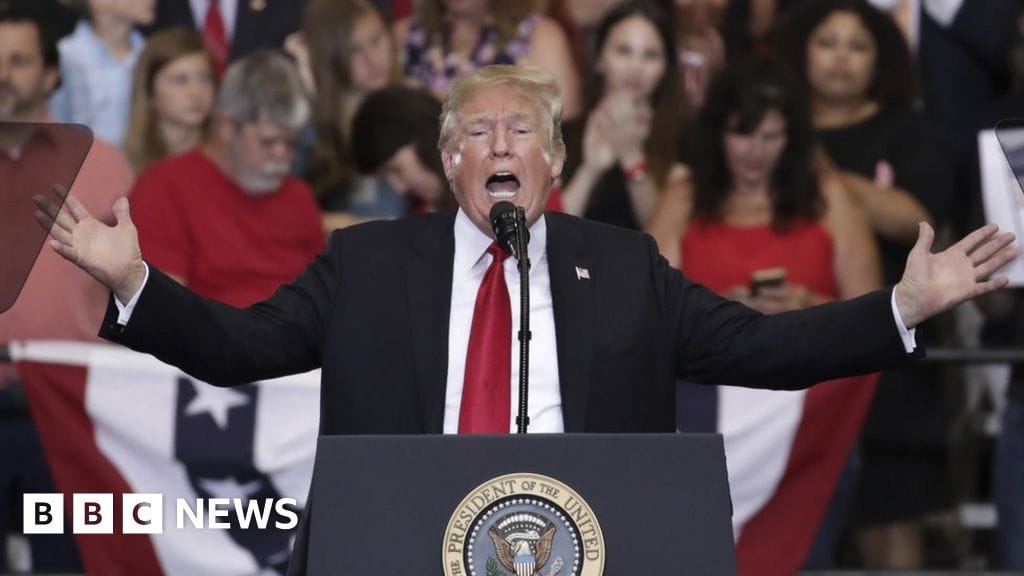
In a significant escalation of international trade tensions, former President Donald Trump recently proposed a series of tariffs aimed at the European Union, alongside penalties on smartphone imports. Specifically, Trump indicated that his administration might introduce a 50% tariff on a wide range of EU goods, as well as a 25% penalty on smartphones, a move that has sent ripples through both domestic and international markets.
The proposed tariffs come against the backdrop of an ongoing trade war that has seen numerous rounds of tariffs exchanged between the United States and various trading partners across the globe. Trump’s rhetoric suggests a desire to protect American manufacturing and jobs by making foreign products more expensive for U.S. consumers. However, the implications of such tariffs extend beyond simple economic protectionism, affecting global supply chains and diplomatic relations.
The European Union has long been a focal point for American trade policy, particularly during the Trump administration. Past disputes have included issues ranging from agricultural subsidies to automotive tariffs. Trump’s latest announcement rekindles concerns about a potential trade conflict that could involve retaliation from European nations. In past negotiations, the EU has remarked on the potential for reciprocal tariffs in response to any unilateral actions taken by the United States.
The technology sector is particularly vulnerable in this new round of proposed tariffs. Smartphones, which are integral to daily life and commerce, could see prices rise significantly if these tariffs are enacted. Companies that rely on international supply chains may face increased costs that could ultimately be passed on to consumers. Major smartphone manufacturers, many of which have substantial operations in both the United States and Europe, must now contend with the financial implications of these proposed changes.
Trade analysts have expressed concern about the potential for inflationary pressures should Trump’s tariffs come to fruition. A sudden increase in costs for imported goods could lead to higher prices across the economy, affecting not only consumer electronics but also everyday goods that rely on European materials or components. The interconnected nature of global trade means that tariffs do not exist in a vacuum, and the knock-on effects could be felt in various sectors beyond those specifically targeted.
The government’s response to Trump’s proposals remains to be seen, as current administration officials may take differing approaches to trade policy. The Biden administration, for instance, has focused on rebuilding alliances with European partners and seeking collaborative solutions to global trade challenges. However, Trump’s overtures could complicate these efforts, especially if key EU concessions are not reciprocated.
Furthermore, Trump’s proposals are likely to have consequences for American consumers. If imported smartphones and other electronic goods become significantly more expensive, consumers may have to adjust their purchasing habits, leading to a potential decline in sales for U.S. retailers. This might give rise to a competitive disadvantage for American companies that might struggle to keep pace with foreign manufacturers who remain unaffected by tariffs or trade barriers.
As discussions unfold, economic analysts are watching closely for signs of how the proposed tariffs might influence market dynamics. Investors remain uncertain, with stock market volatility likely in response to shifting trade policies. Additionally, companies that are heavily reliant on imports are preparing contingency plans to navigate a landscape that could involve prohibitive tariffs and additional regulatory hurdles.
In summary, Donald Trump’s proposed imposition of a 50% tariff on EU goods and a 25% penalty on smartphones signals a dramatic intensification of the trade war that has characterized U.S. economic policy in recent years. The potential for retaliatory measures from the EU looms large, raising questions about the future of transatlantic trade relations. As businesses and consumers anticipate the ramifications of these tariffs, ongoing negotiations and responses from government officials will play a crucial role in shaping the evolving narrative of international trade.