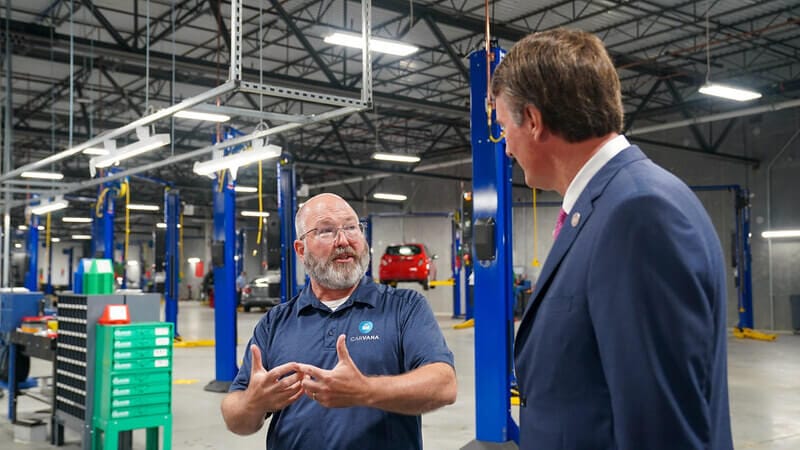
Carvana, the online used car retailer that gained significant attention during the pandemic, is currently facing a challenging moment as its stock prices have slipped in response to critical commentary from a well-known short seller. The short seller, whose firm has a reputation for taking positions against companies it believes are overvalued, has characterized Carvana’s plans for a turnaround in 2024 as a mirage. This statement has sparked a wave of concern among investors and analysts regarding the company’s future prospects.
The used car market has been undergoing significant changes in recent years, driven by various factors including supply chain disruptions, changing consumer preferences, and economic uncertainties. Carvana, which built its business model around the convenience of online car buying and selling, has had to adapt to these evolving market conditions. The company initially saw explosive growth during the COVID-19 pandemic as consumers turned to online platforms for their purchasing needs. However, as the market began to stabilize, Carvana faced a host of challenges that have tested its business model.
One of the primary concerns raised by the short seller is Carvana’s financial health. The company has been grappling with rising operational costs, which have been exacerbated by inflation and supply chain issues. These financial pressures have led to increased scrutiny of Carvana’s ability to maintain profitability in an increasingly competitive environment. Investors are particularly wary of the company’s debt levels, which have been a point of contention as they evaluate the sustainability of its growth strategy.
In addition to financial concerns, the short seller has highlighted the competitive landscape of the used car market. Traditional dealerships and other online competitors have ramped up their efforts to capture market share, making it more difficult for Carvana to differentiate itself. The company has invested heavily in technology and logistics to streamline its operations, but whether these investments will translate into a competitive advantage remains to be seen.
The short seller’s remarks have also drawn attention to Carvana’s ambitious plans for 2024. The company has projected a significant turnaround, aiming to improve its margins and expand its market presence. However, critics argue that these projections may be overly optimistic given the current market dynamics. The skepticism surrounding Carvana’s turnaround plans raises questions about the feasibility of its growth strategy and whether it can effectively execute its vision in a challenging environment.
As Carvana navigates these uncertainties, it faces the dual challenge of restoring investor confidence while simultaneously addressing the operational hurdles that have plagued its business. The company has been working to improve its customer experience and streamline its processes, but the effectiveness of these initiatives in driving sales and enhancing profitability remains uncertain.
In the wake of the short seller’s comments, Carvana’s leadership has emphasized its commitment to transparency and accountability. The company has indicated that it will continue to provide updates on its performance and strategic initiatives as it works to address the concerns raised by market participants. However, the road ahead appears fraught with challenges, and it remains to be seen whether Carvana can successfully execute its turnaround plans.
The broader economic environment also plays a crucial role in shaping Carvana’s prospects. Factors such as interest rates, consumer confidence, and overall economic growth will influence the used car market and, by extension, Carvana’s performance. As consumers navigate a landscape of rising costs and uncertainty, their purchasing decisions will be critical to the company’s recovery.
In conclusion, Carvana’s recent stock decline, prompted by skepticism from a prominent short seller, underscores the challenges the company faces as it seeks to navigate a complex and evolving used car market. The ambitious plans for a turnaround in 2024 have been met with skepticism, raising questions about the company’s ability to achieve its goals. As Carvana works to address operational challenges and restore investor confidence, the coming months will be pivotal in determining the company’s future trajectory in an increasingly competitive landscape.


