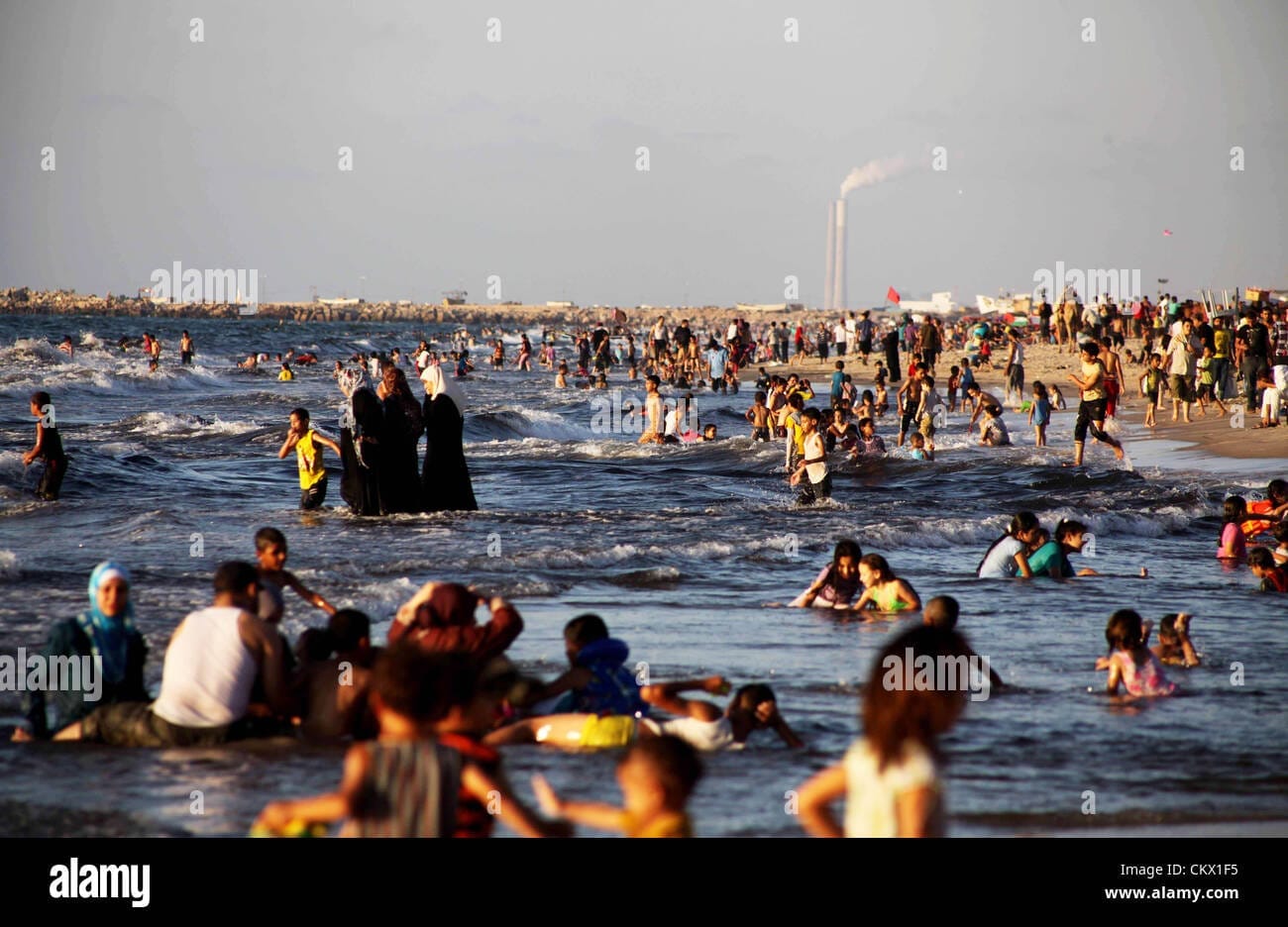
In a sweeping proposal that has sparked vigorous debate both in the Middle East and beyond, former U.S. President Donald Trump has articulated an unexpected vision for the embattled Gaza Strip: a transformation of the region into a luxury tourist destination dubbed the “Riviera of the Middle East.” The real estate magnate-turned-politician sees immense potential in Gaza’s location along the Mediterranean coastline, framing this redevelopment dream as a way to inject economic prosperity into a region long known for its strife.
Trump, no stranger to ambitious, polarizing projects, presented his outlook during a press conference, describing Gaza as a site with untapped potential that could be turned into “something magnificent.” This announcement comes against the backdrop of multiple humanitarian and geopolitical crises in Gaza, where more than two million residents face siege-like conditions, economic isolation, and the devastating impact of conflicts.
The core premise of Trump’s proposal hinges on the U.S. “assuming ownership” of Gaza and leveling much of its existing infrastructure to make way for luxury resorts, shopping districts, and entertainment hubs. Trump likened this envisioned development to the French Riviera and proposed that the economic activity generated could stabilize Gaza and potentially, the broader region. “It would be a win-win for everyone,” Trump said, “an extraordinary opportunity for Gaza’s people, and for peace.”
Key attributes of the plan include attracting international investors to fund the redevelopment and grounding the project in principles of economic globalization. Real estate moguls and global corporations would be encouraged to lease plots of land to construct resorts and facilities that cater to high-end tourism. Coastal promenades, exclusive beach clubs, and sprawling golf courses are among the features envisioned in initial sketches provided by Trump’s advisers.
While the proposal has its share of supporters who regard it as an inventive solution to Gaza’s deep-seated economic despair, it has also drawn immense criticism. Opponents have denounced the plan as unrealistic, morally untenable, and problematically dismissive of Gaza’s existing culture, history, and more importantly, its people. Critics argue that any such “renaissance” for Gaza would require population displacement—a contentious proposition that risks infringing upon human rights and creating political instability.
Middle Eastern leaders, regional institutions, and international bodies have launched a barrage of responses, each casting doubt on the project’s viability. Palestinian officials have dismissed the plan as an affront to their sovereignty, questioning by what authority the United States could claim “ownership” over the Gaza Strip. Meanwhile, humanitarian agencies raised concerns about the exclusion of Gaza’s residents from the planning and decision-making processes, the potential for poverty-driven displacement, and the lack of consideration for the territory’s unique social and historical fabric.
Secretary-General of the United Nations, António Guterres, has also weighed in, noting the precarious legal and humanitarian challenges such a project would pose. “Economic upliftment must not come at the expense of human dignity or international law,” he said.
For Trump, however, the obstacles are framed not as barriers but as challenges to overcome. Drawing parallels to cities like Dubai, he emphasized how once-precarious regions could be propelled into economic prominence through strategic investments. Trump said, “All great cities were, at one point, ideas thought impossible to achieve. If we can secure the resources and unify stakeholders, Gaza’s future as a Mediterranean paradise is not just a dream—it’s a blueprint.”
The project would likely require billions of dollars in initial infrastructure investments, a significant portion of which Trump believes could come from the Gulf Arab nations and other international donors. He also expressed hope that Israel and neighboring Egypt could collaborate in fostering a shared economic zone to incentivize investments.
Despite his buoyant rhetoric, skeptics caution against oversimplification. Middle East historians underscore the layering complexities of Gaza’s socio-economic and geopolitical issues. They liken seeing Gaza’s future purely through a real estate prism as reductive, neglecting the broader conflictual contexts that make progress deeply challenging on the ground.
Furthermore, Gaza’s residents, long beleaguered by economic hardships and mobility restrictions, are unlikely to welcome such top-down policymaking, regardless of its economic promises. Analysts forecast resistance, not only because of the upheaval to communal living but also the significant risks of exploitation that could emerge from privatized land ownership and sudden, massive migration into the region by foreign entities.
As momentum for the plan gathers global attention, it remains to be seen whether Trump’s proposition will move beyond rhetoric to execution. If pursued, it could usher in an era of profound change in the region but not without enduring scrutiny and safeguards ensuring benefit-sharing among Gaza’s longstanding inhabitants.