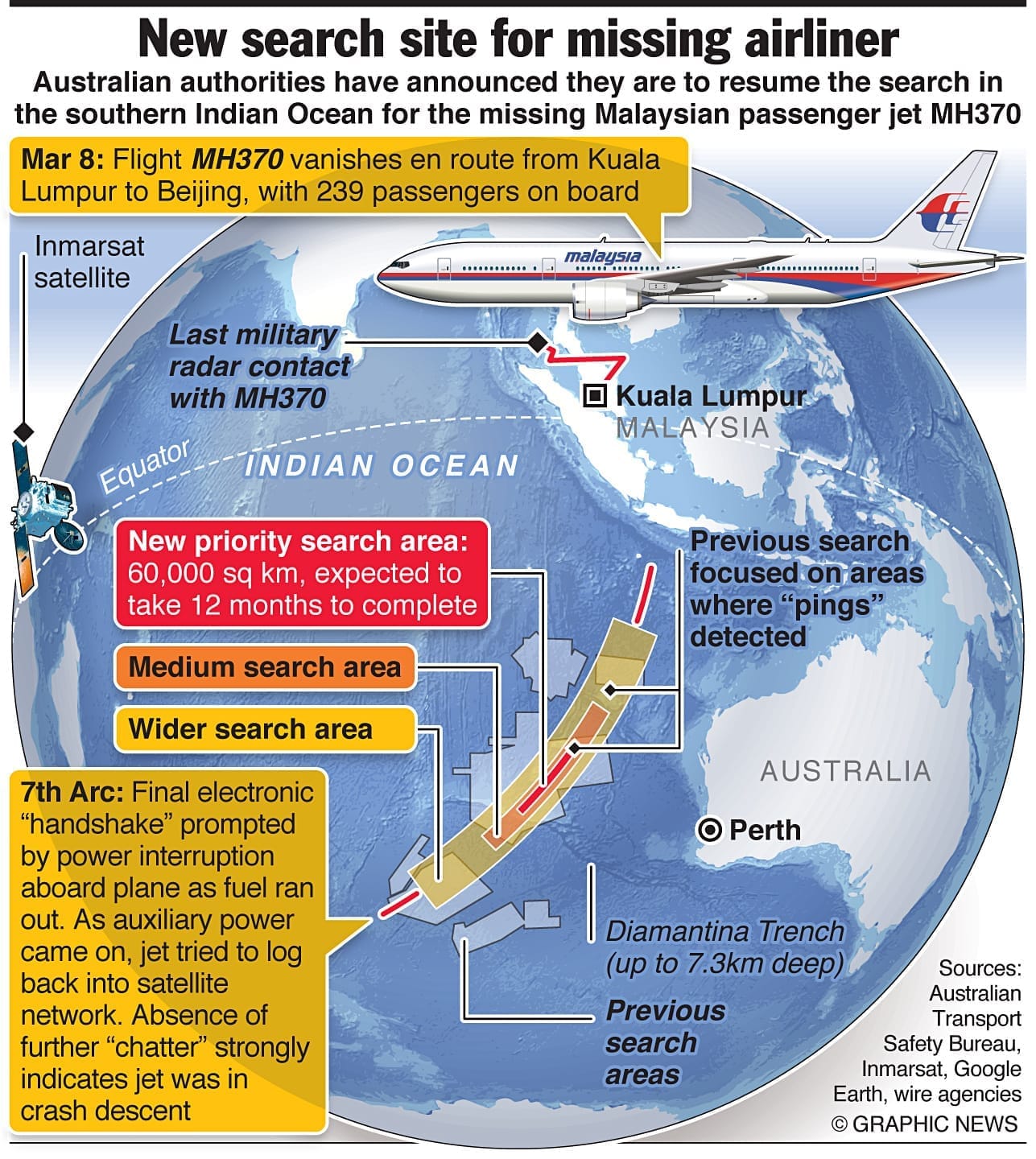
The mystery surrounding Malaysia Airlines Flight MH370, which disappeared on March 8, 2014, continues to intrigue and baffle the world even a decade later. With 239 individuals on board, the flight vanished from radar just 38 minutes after taking off from Kuala Lumpur International Airport en route to Beijing. Despite extensive international search operations covering large swathes of the southern Indian Ocean, no definitive traces of the aircraft have ever been conclusively identified. In light of recent advancements in technology and data analysis, Malaysia has announced plans to resume the search for the missing flight.
The decision to relaunch the search comes from both a desire to bring closure to the families of those aboard and a renewed hope presented by technological advancements. Over the past decade, various pieces of debris believed to be from MH370 have washed up on shores across the Indian Ocean, suggesting the plane made an impact in the remote waters. However, the precise location of the wreckage has remained elusive.
Malaysian Transportation Minister Anthony Loke announced the plans for renewed efforts during a press conference. He emphasized the government’s commitment to providing answers for the families of the missing passengers. The search will focus on areas previously explored but neglected due to a lack of information, as well as new regions identified through improved analysis of ocean drift patterns and satellite data.
The search will also leverage the latest technology in underwater mapping and exploration. Drones and autonomous underwater vehicles (AUVs) will be utilized to conduct deep-sea surveys, providing researchers with high-resolution images and data to assist in pinpointing the last known location of the flight. The use of these technologies represents a significant evolution in search methodology compared to operations conducted in the years immediately following the disappearance.
In the years since the initial search concluded, the aviation community, researchers, and enthusiasts have continued to delve into various possible scenarios surrounding the aircraft’s fate. Some theories suggest the plane could have been diverted intentionally, while others speculate it might have experienced a catastrophic failure. Nonetheless, these theories remain unproven without concrete evidence from the wreckage.
Families of the victims have long expressed their frustrations over the lack of conclusive answers regarding their loved ones. Many have continued to advocate for increased efforts and resources to uncover the truth about what happened on that fateful day. The relaunch of the search is expected to reignite hope among these families and the public at large as they seek closure.
The intricate web of this aviation mystery not only lies in the search for the plane but also underscores the need for ongoing improvements and regulations in aviation safety. The disappearance of MH370 triggered changes across the global aviation industry, including enhanced tracking systems for commercial flights and improved communication protocols. These developments are aimed at preventing such an untraceable incident from occurring in the future.
The case of Flight MH370 remains a poignant reminder of the vulnerability inherent in air travel. While airlines have made considerable headway in enhancing safety measures, the mystery surrounding MH370 is a powerful illustration of how swiftly unexpected events can unfold. As the new search effort begins, many around the world will be watching closely, hopeful that new strategies and technologies can uncover the final resting place of the ill-fated aircraft.
As Malaysia undertakes this significant task, investigations will not only focus on the lost aircraft but will also continue to explore the implications of the tragedy on international aviation as a whole. The aviation industry must evolve, learn from this incident, and pursue every avenue to ensure passenger safety and confidence in air travel.
In conclusion, the resumption of the search for Flight MH370 after ten years reflects an enduring commitment to addressing one of aviation’s greatest mysteries. Utilizing modern technology and a renewed workforce, Malaysia hopes to answer questions that have lingered since that fateful day.