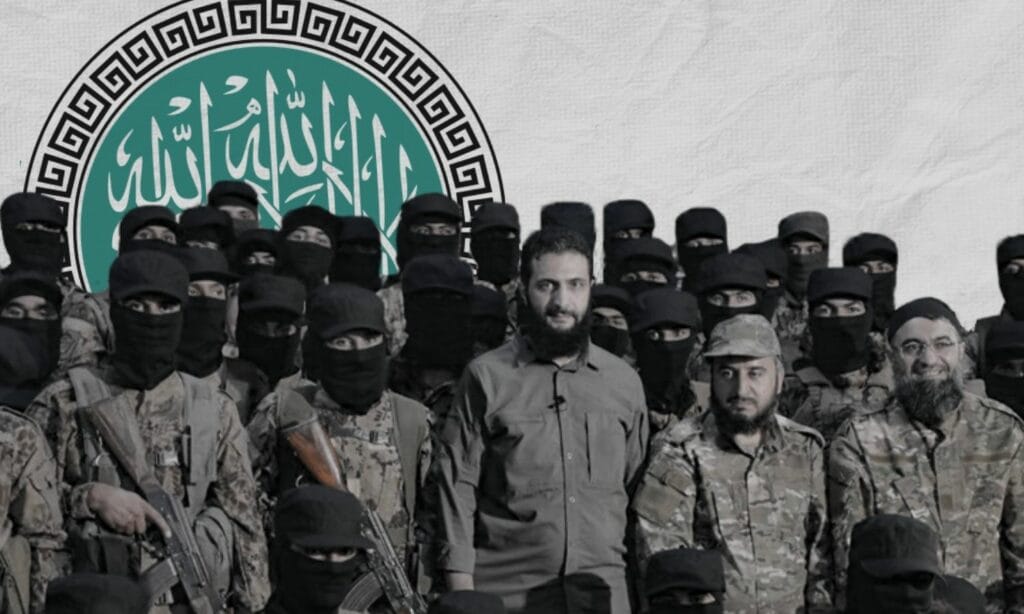
Abu Mohammed al-Golani is a name that has become synonymous with the Syrian insurgency. As the leader of the Hayat Tahrir al-Sham (HTS) group, he has managed to build a powerful organization that has challenged the authority of President Bashar al-Assad and become one of the most influential players in the Syrian civil war.
However, despite his prominence, al-Golani remains a mysterious figure. Little is known about his background, and his true identity has been the subject of much speculation. Some reports suggest that he was born in Syria, while others claim that he is of Iraqi or Lebanese origin.
What is known, however, is that al-Golani has a long history of involvement in extremist groups. Prior to the outbreak of the Syrian civil war, he was a member of the al-Qaeda affiliate in Iraq, where he fought against American and Iraqi forces. After the US withdrawal from Iraq in 2011, al-Golani traveled to Syria, where he joined the al-Qaeda affiliate in the country, Jabhat al-Nusra.
At the time, Jabhat al-Nusra was one of the most powerful insurgent groups in Syria, and al-Golani quickly rose through the ranks. He became known for his military prowess and his ability to build alliances with other insurgent groups. However, he also gained a reputation for his ruthlessness and his willingness to use violence to achieve his goals.
In 2016, al-Golani announced that Jabhat al-Nusra would be rebranding itself as Jabhat Fateh al-Sham (JFS), and would be distancing itself from al-Qaeda. The move was seen as an attempt to rebrand the group and make it more palatable to the international community.
However, the rebranding effort was short-lived. In 2017, JFS merged with several other insurgent groups to form Hayat Tahrir al-Sham (HTS). Al-Golani became the leader of the new group, which quickly established itself as one of the most powerful insurgent groups in Syria.
Under al-Golani’s leadership, HTS has continued to challenge the authority of the Assad regime. The group has launched numerous attacks on government forces and has managed to capture large swaths of territory in northern Syria.
However, al-Golani’s success has not been without controversy. HTS has been accused of human rights abuses, including the use of torture and the suppression of dissent. The group has also been linked to several terrorist attacks, including a 2017 bombing in Damascus that killed dozens of people.
Despite these challenges, al-Golani remains a key player in the Syrian civil war. His ability to build alliances and navigate the complex web of insurgent groups has allowed him to maintain his position as one of the most powerful leaders in the country.
In recent years, al-Golani has sought to rebrand himself as a more moderate figure. He has called for an end to the violence in Syria and has expressed a willingness to engage in peace talks with the Assad regime. However, his sincerity has been questioned by many, and it remains to be seen whether he is truly committed to finding a peaceful solution to the conflict.
One thing is certain, however: Abu Mohammed al-Golani is a force to be reckoned with in Syria. His leadership of HTS has allowed him to build a powerful organization that has challenged the authority of the Assad regime and become one of the most influential players in the Syrian civil war.
As the conflict in Syria continues to evolve, it is likely that al-Golani will remain a key player. His ability to navigate the complex landscape of the conflict and build alliances with other insurgent groups has allowed him to maintain his position as one of the most powerful leaders in the country.
In the end, the fate of Syria will likely be determined by a complex interplay of factors, including the actions of al-Golani and HTS. As the conflict continues to unfold, it is clear that al-Golani will remain a major player, and his actions will have significant consequences for the future of the country.
The rise of Abu Mohammed al-Golani is a testament to the complex and ever-changing nature of the Syrian civil war. As the conflict continues to evolve, it is likely that new leaders and new groups will emerge, each with their own agendas and goals. However, for now, al-Golani remains one of the most powerful and influential figures in the conflict.
In conclusion, Abu Mohammed al-Golani is a mysterious and complex figure who has managed to build a powerful organization that has challenged the authority of President Bashar al-Assad. His leadership of HTS has allowed him to become one of the most influential players in the Syrian civil war, and his actions will likely have significant consequences for the future of the country.