In a groundbreaking development for astrophysics, the James Webb Space Telescope (JWST) has successfully captured detailed images of three ultramassive galaxies. This discovery comes as a significant leap in our understanding of the universe, challenging existing theories about the formation and evolution of galaxies in the early cosmos. The implications of these findings are monumental, giving scientists new data that may reshape our comprehension of cosmic history.
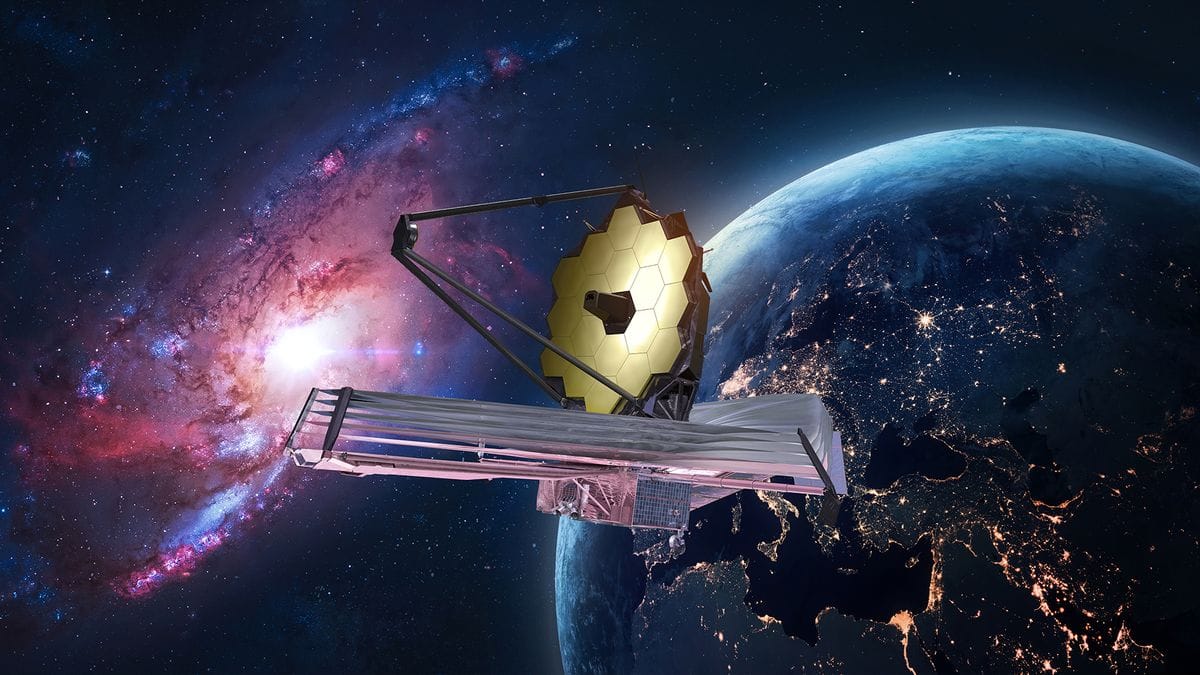
The James Webb Space Telescope, launched on December 25, 2021, is the most powerful space telescope ever constructed. Its advanced instruments and position beyond Earth’s atmosphere allow for unprecedented observations of the universe. JWST operates primarily in the infrared spectrum, enabling it to peer through cosmic dust and observe celestial objects from billions of years ago. These recent photographs of the ultramassive galaxies highlight the telescope’s capabilities and open new avenues for research in astrophysics.
In their research, a team of international scientists utilized JWST to examine regions of space previously unexplored in such detail. Upon analysis, they discovered three ultramassive galaxies—each more than a billion times the mass of the Sun and beaming with stellar activity. These galaxies, positioned at a distance of approximately 13 billion light-years from Earth, provide crucial insights into the early universe, as they formed just a few billion years after the Big Bang. The size and characteristics of these galaxies present compelling challenges to established models regarding how galaxies are supposed to develop and evolve over time.
Historically, galaxy formation theories have suggested that such ultramassive galaxies should have taken much longer to develop. Most current models posit that galaxies grow gradually, accumulating mass over billions of years. However, the existence of these three massive galaxies suggests a much more rapid formation process. This revelation could indicate that unknown mechanisms or conditions were at play in the early universe, allowing galaxies to form significantly faster than previously believed.
The first of the observed galaxies, known as GLASS-z13, exhibits intense star-forming activity, suggesting that the processes contributing to its rapid growth were also active at an early stage in cosmic history. The estimated star formation rate is astonishing, with potential for each new star born to ignite a rapid sequence of growth. This could alter existing theory that posits a gradual accumulation due to interactions with other galaxies.
Secondly, the galaxy identified as SPT0615-JD, has been observed to have a complex structure, hinting at a turbulent history marked by mergers with other galaxies. These interactions could have fueled its accelerated growth, driving researchers to explore interactions among galaxies in ways that were previously overlooked. Understanding these interactions could enhance our grasp of how such massive entities can emerge in the universe.
Finally, the third ultramassive galaxy, cataloged as SPT0418-47, exhibits a remarkably dense core surrounded by vast regions of gas and dust. Its dynamics may reflect a different evolutionary pathway, possibly indicating the need for new simulations and advanced models to better account for these newly observed phenomena.
These discoveries raise fundamental questions: How did these galaxies become so massive so quickly? What explosive events and interactions catalyzed their growth? The JWST’s imagery continuously proves that the universe is more dynamic and interconnected than traditional models have suggested.
The ramifications of this research extend beyond merely rewriting galaxy formation models. The implications may touch upon our understanding of dark matter and dark energy, the two vastly mysterious components making up a significant portion of the universe. The rapid formation of ultramassive galaxies could give insights into the role of dark matter in fostering galaxy interactions and merging, as well as the influence of dark energy on the expansion of the universe.
As these images are scrutinized and analyzed further, researchers expect to derive additional insights and possibly discover even more ultramassive galaxies hidden in the depths of space. Furthermore, this newfound knowledge will likely spur enhanced computational models and simulations, promoting deeper investigations into early cosmic history and the very nature of the universe.
The JWST, through its revolutionary technology, continues to unveil the mysteries of the cosmos. The documentation of these ultramassive galaxies is not merely a spectacle; it is a pivotal turning point in astronomical research that could redefine our understanding of the formation and growth of galaxies in the early universe. With every new observation, the telescope not only provides stunning visuals but also catalyzes scientific inquiry that pushes the boundaries of human knowledge about the universe we inhabit.