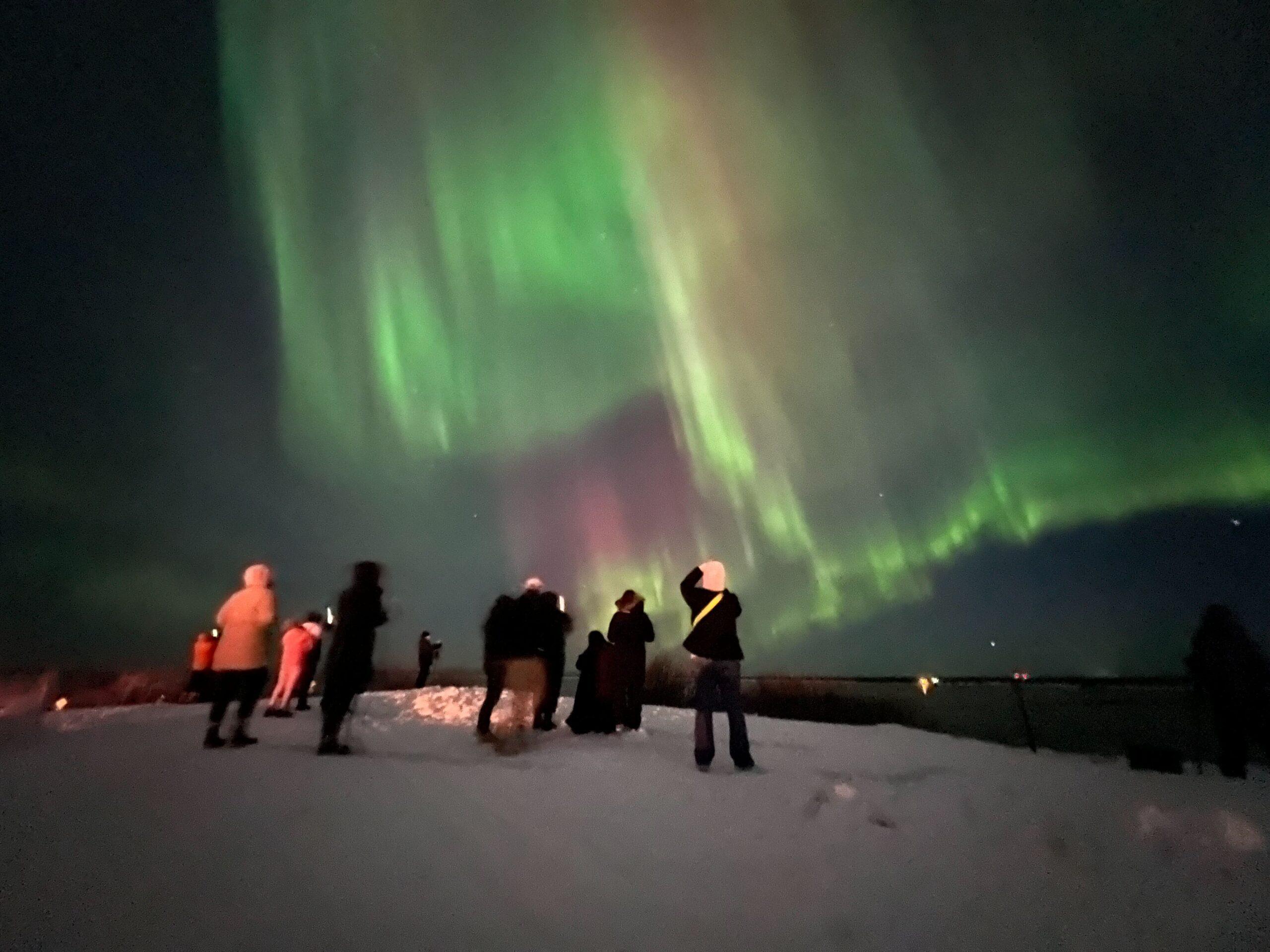
The mesmerizing phenomenon of the Aurora Borealis, commonly known as the Northern Lights, is expected to grace the skies over several northern US states tonight due to a geomagnetic storm. This celestial display, caused by charged particles from the sun colliding with Earth’s atmosphere, is one of nature’s most stunning spectacles and a must-see event for skywatchers.
Experts from the National Oceanic and Atmospheric Administration (NOAA) indicate that heightened solar activity and favorable geomagnetic conditions will allow the lights to be visible from areas extending further south than typically expected. These displays happen because the sun emits streams of charged particles known as the solar wind. When these particles meet Earth’s magnetic field, they interact with atmospheric gases, creating vibrant colors of green, pink, and sometimes even red or purple in the sky.
The states most likely to witness the phenomenon include parts of Montana, Minnesota, North Dakota, and Michigan. Residents in areas with minimal light pollution and clear skies have the highest chances of catching the event. Observers are urged to head to open spaces away from city lights, such as rural areas or high elevations, to enhance visibility.
Aurora visibility is influenced by the KP index, a scale ranging from 0 to 9 that represents geomagnetic storm activity. Anticipated KP levels tonight are expected to reach 6 or above, signifying conditions conducive to auroral displays. Typically, the lights are confined to the Arctic and Antarctic regions. However, when geomagnetic storms intensify, they can push the auroral oval southward, expanding visibility.
While viewing conditions depend largely on weather patterns, clear skies are forecasted over much of the Northern Plains and Upper Midwest, enhancing the possibility for residents to marvel at this natural display. Meanwhile, astronomy enthusiasts are sharing tips to improve the likelihood of observation. Key advice includes checking aurora forecast maps, setting up in darkened areas, and staying patient, as the lights often appear in bursts.
The timing of this aurora display aligns with an ongoing peak within the current solar cycle, an 11-year period of solar activity variation. This particular solar cycle has produced more frequent and intense geomagnetic storms, offering skywatchers additional opportunities to see the Northern Lights.
NOAA also warns that geomagnetic storms can impact technologies reliant on Earth’s magnetosphere. Interference with GPS systems, power grids, and radio communications might occur. While such disruptions are generally minimal during moderate storms, they serve as a reminder of the powerful forces at play.
The Northern Lights carry significance beyond their aesthetic allure. Indigenous peoples, from the Inuit of Canada to the Sámi in Norway, have long incorporated auroras into their cultural narratives and spiritual beliefs. These lights also remind us of our planet’s connection to the sun—its cosmic neighbor almost 93 million miles away.
For those unable to witness tonight’s display firsthand, numerous live streams and virtual viewing platforms are available to bring the spectacle closer. Some of the most relied upon tools come from satellites monitoring solar winds and Earth-based sensors recording geomagnetic activity in real-time.
As always, the best times to observe the auroras are typically late evening to early morning. However, with the moon in a less bright phase tonight, conditions are especially favorable for a more profound and magical viewing experience.
The Northern Lights are a reminder of the beauty and wonder of our natural world. Whether you’re seeing them for the first time or are an experienced aurora chaser, their fleeting nature makes them all the more special.