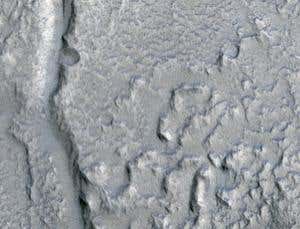
A new study published in the journal Nature is shaking up our understanding of the Moon. According to the research, the Moon may not be the geologically inert body scientists once thought it to be. The study, led by a team of researchers from the University of Arizona and the Lunar and Planetary Institute, challenges the long-held assumption that the Moon has been geologically dead for billions of years. Instead, their findings suggest that the Moon is still experiencing ongoing geological processes, including potential subsurface volcanism.
The research team reached these conclusions by analyzing seismic data collected by seismometers deployed on the Moon during NASA’s Apollo missions. They also examined lunar samples brought back by the Apollo astronauts. By studying these data sources, the researchers detected subtle tremors and vibrations that indicated ongoing activity deep within the lunar interior.
One of the most intriguing findings was the detection of a pattern of seismic waves that suggested the presence of a molten layer beneath the Moon’s surface. This molten layer, while likely not as extensive or active as the Earth’s mantle, could be responsible for the observed tremors and potentially for the occasional eruption of lava onto the lunar surface.
The study’s authors emphasize that further research is needed to confirm these findings and to fully understand the nature and extent of the Moon’s present-day geological activity. However, their preliminary results have significant implications for our understanding of the Moon’s history, evolution, and potential for future exploration.
For decades, the Moon has been regarded as a geologically dead world, a barren and silent satellite orbiting Earth. This new study suggests that the Moon may be far more dynamic and complex than we previously thought. The discovery of potential ongoing volcanism on the Moon raises intriguing questions about the Moon’s internal structure, its past, and its potential for harboring resources or even life.
As we continue to explore the Moon and other celestial bodies, it is becoming increasingly clear that our understanding of the universe is constantly evolving. This new study serves as a reminder that even seemingly well-understood objects, like our own Moon, can still hold surprises and challenge our assumptions.