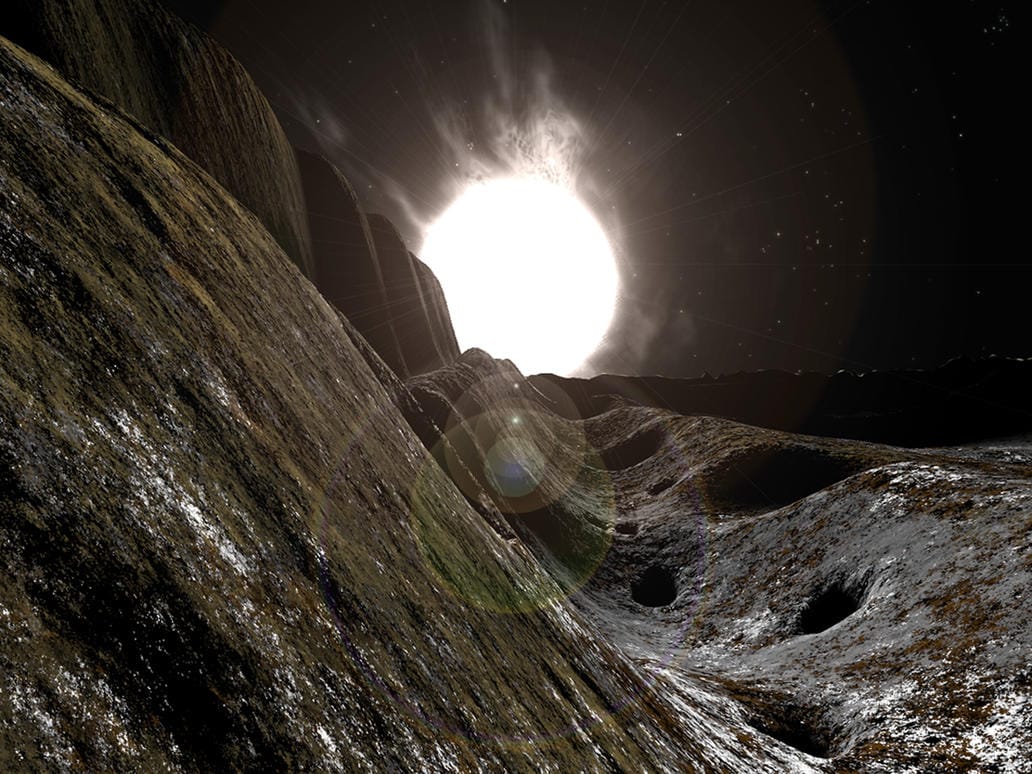
The exploration of Mercury, the closest planet to the Sun, has long been a challenging endeavor for scientists and space agencies. With its extreme temperatures, harsh environment, and proximity to the Sun, studying this enigmatic planet has posed significant obstacles. However, a recent mission has made remarkable strides in unveiling the hidden features of Mercury’s surface, providing unprecedented insights into its geological history and composition.
The spacecraft, launched as part of a dedicated mission to study Mercury, has successfully captured a series of high-resolution images that reveal intricate details of the planet’s surface. These images showcase a variety of geological features, including craters, ridges, and plains, which have remained largely unexplored until now. The advanced imaging technology onboard the spacecraft has allowed scientists to observe these features with a level of detail that was previously unattainable.
One of the most significant findings from the mission is the discovery of previously unknown geological formations. The images reveal a complex landscape that suggests a dynamic geological history, including evidence of volcanic activity and tectonic processes. This new data challenges previous assumptions about Mercury’s geological evolution and raises important questions about the planet’s past.
In addition to revealing new geological features, the spacecraft’s observations have also provided insights into the composition of Mercury’s surface materials. By analyzing the light reflected from the surface, scientists can determine the mineralogy of the planet, which is crucial for understanding its formation and evolution. The data collected by the spacecraft indicates a diverse range of materials, including silicate minerals and metallic compounds, which may offer clues about the processes that shaped Mercury over billions of years.
The mission has also focused on understanding the impact of solar radiation on Mercury’s surface. Being so close to the Sun, the planet experiences intense solar winds and radiation, which can significantly alter its surface characteristics. The detailed images captured by the spacecraft allow scientists to study the effects of these solar interactions, providing a more comprehensive understanding of how Mercury’s environment influences its geology.
Furthermore, the mission has implications for future exploration of Mercury and other terrestrial planets. The advanced imaging techniques employed by the spacecraft could be applied to future missions, enhancing our ability to study planetary surfaces in detail. As scientists continue to analyze the data collected, they hope to develop new models that explain the geological processes at work on Mercury and how they compare to those on other planets in our solar system.
The successful capture of these detailed images marks a significant milestone in planetary science. The mission has not only expanded our knowledge of Mercury but has also demonstrated the capabilities of modern spacecraft technology. As researchers continue to process and interpret the data, the findings are expected to contribute to a deeper understanding of the solar system’s formation and the evolution of rocky planets.
In conclusion, the recent mission to Mercury has yielded spectacularly detailed images that reveal the planet’s hidden surface features. The advanced imaging technology onboard the spacecraft has provided scientists with valuable data that challenges previous assumptions and opens new avenues for research. As the analysis of these images continues, the scientific community anticipates that the insights gained will enhance our understanding of Mercury’s geological history and its place within the broader context of planetary science.