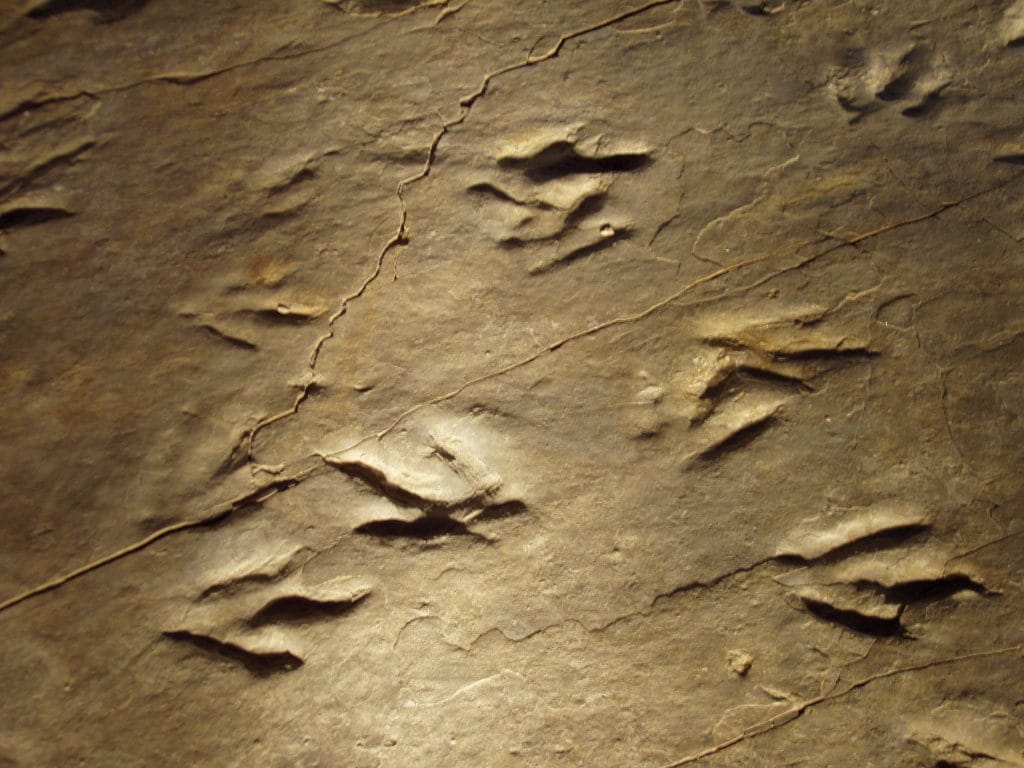
The recent discovery of dinosaur tracks in England, dating back approximately 166 million years, has captivated the scientific community and the public alike. These ancient footprints, which have been referred to as a “dinosaur highway,” were uncovered in a location that is rich in geological history, offering a unique window into the life and movement patterns of dinosaurs during the Jurassic period.
The tracks were discovered in a sedimentary rock formation, which has been dated to the Middle Jurassic epoch. This period is known for its diverse range of dinosaur species, and the newly found tracks provide crucial evidence of their presence in what is now England. The site, located in an area that has seen significant geological activity over millions of years, has been a focal point for paleontological research.
Researchers believe that the tracks were made by a variety of dinosaurs, including theropods and sauropods, which were among the most common types of dinosaurs during the Jurassic period. The footprints vary in size and shape, indicating that different species traversed this area, possibly in search of food or migration. This discovery not only enhances our understanding of the types of dinosaurs that roamed the region but also sheds light on their behavior and interaction with the environment.
The significance of this find extends beyond the footprints themselves. The site provides a rare opportunity to study the conditions under which these dinosaurs lived. The geological context of the tracks reveals information about the climate, vegetation, and landscape of the time. For instance, the presence of certain types of sediment can indicate whether the area was once a wetland, forest, or open plain, all of which would have influenced the types of dinosaurs that inhabited the region.
Paleontologists have emphasized the importance of such discoveries in reconstructing the ecological dynamics of the Jurassic period. By analyzing the distribution of the tracks, researchers can infer movement patterns, social behavior, and even the potential interactions between different species. This information is vital for understanding how dinosaurs adapted to their environments and how they may have responded to changes in climate and habitat.
The discovery of the dinosaur highway has also sparked interest in the local community and among tourists. The site has the potential to become a significant point of interest for educational purposes, allowing visitors to learn about the prehistoric past and the importance of paleontological research. Local authorities are considering measures to protect the site and make it accessible for educational tours, which could benefit both the community and the field of paleontology.
In addition to its educational value, the discovery of these tracks contributes to the broader narrative of dinosaur evolution and migration. The Jurassic period was a time of significant change for dinosaurs, with many species evolving and diversifying. Understanding the movement patterns of these creatures can provide insights into how they adapted to their environments and how they interacted with one another.
As researchers continue to study the tracks, they are employing advanced technologies, such as 3D scanning and digital modeling, to create detailed records of the footprints. This approach allows for a more comprehensive analysis of the tracks and enables scientists to share their findings with a global audience. The use of technology in paleontology is becoming increasingly important, as it allows for the preservation of data that can be revisited and analyzed by future generations.
In conclusion, the discovery of the dinosaur highway tracks in England represents a significant advancement in our understanding of Jurassic dinosaurs. These footprints not only provide a glimpse into the past but also open up new avenues for research and education. As scientists continue to explore this site, they are likely to uncover even more information about the dinosaurs that once roamed the Earth, further enriching our knowledge of this fascinating era in our planet’s history.


