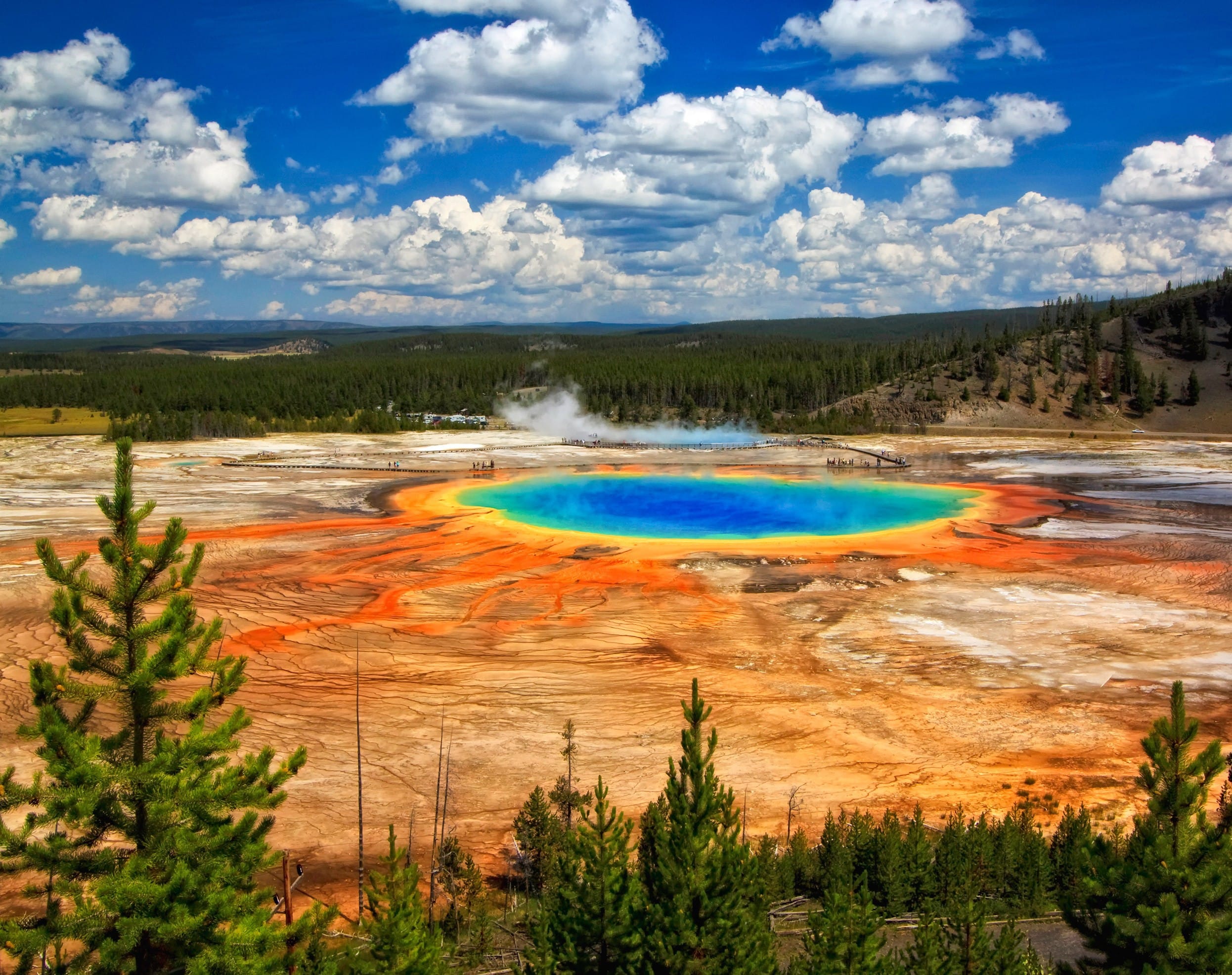
Yellowstone National Park, located primarily in Wyoming, is not only famous for its breathtaking landscapes and diverse wildlife but also for being one of the most significant geothermal areas in the world. At its core lies a supervolcano, which has erupted several times in the past, most notably approximately 640,000 years ago. Given its history, the question of whether Yellowstone will erupt again is a topic of great interest among scientists and the public alike. Recent research has shed new light on this issue, offering answers that may alleviate some concerns while underscoring the importance of ongoing monitoring.
The Yellowstone Caldera, the volcanic system that underlies the park, is characterized by its geothermal features, including geysers, hot springs, and fumaroles. The caldera itself is a massive depression formed by past volcanic eruptions, and its activity is closely monitored by the Yellowstone Volcano Observatory (YVO). Scientists utilize a variety of tools, including seismographs, GPS stations, and satellite imagery, to track ground deformation, seismic activity, and thermal changes within the park.
One of the key findings from recent studies is that while the Yellowstone supervolcano is indeed active, the likelihood of a large-scale eruption occurring in the near future is minimal. Researchers have noted that the caldera has experienced periods of unrest, characterized by increased seismic activity and ground deformation. However, these events are often part of the natural volcanic cycle and do not necessarily indicate an impending eruption. In fact, scientists have observed that the current rate of ground uplift in the Yellowstone area has slowed, suggesting a stabilization of volcanic activity.
Furthermore, studies have indicated that the magma reservoir beneath Yellowstone is much more complex than previously understood. It consists of multiple layers, with varying compositions and temperatures. This complexity means that the behavior of the magma is not straightforward, and predicting eruptions becomes more challenging. Researchers are now employing advanced modeling techniques to better understand the interactions between the different magma layers and how they influence the overall volcanic system.
The potential for smaller-scale volcanic activity, such as hydrothermal explosions, remains a concern. These explosions can occur when superheated water beneath the surface rapidly turns to steam, causing violent eruptions of steam, ash, and rock. While these events can be dangerous, they are typically localized and do not pose the same level of risk as a supereruption. Scientists continue to study the hydrothermal systems within Yellowstone to improve their understanding of these phenomena and enhance public safety measures.
Public interest in Yellowstone’s volcanic activity often spikes during periods of increased seismic activity or ground deformation. It is important for the scientific community to communicate effectively with the public about the nature of these events and what they mean for the safety of park visitors and surrounding communities. The YVO plays a crucial role in this effort, providing timely updates and educational resources to help people understand the geological processes at work.
In addition to monitoring volcanic activity, researchers are also exploring the broader implications of Yellowstone’s geothermal features for climate change and ecosystem dynamics. The park’s unique geothermal systems support a diverse array of plant and animal life, and understanding how these ecosystems function is vital for conservation efforts. As climate change continues to impact weather patterns and temperatures, scientists are investigating how these changes may affect Yellowstone’s geothermal activity and its ecosystems.
In conclusion, while the Yellowstone supervolcano remains an active geological feature, recent research indicates that the likelihood of a large-scale eruption in the near future is low. Continuous monitoring and advanced scientific techniques are crucial for understanding the complex dynamics of the caldera and ensuring public safety. As scientists continue to study this remarkable natural wonder, they also emphasize the importance of education and communication with the public to foster a better understanding of volcanic activity and its implications.